Monday, 10 June 2013

Worrying times

A walk from town back home, along some 6 miles of country lanes and verdant footpaths gave further examples that something is badly wrong with nature at present.
I have already noted the paucity of moths this year. This can partly be put down to the coldest spring and early summer on record, but it cannot disguise the fact that something more important and unexplained is happening to insects. An example is the heart and dart moth. This remains the 2nd most common moth in my garden and in Hertfordshire as a whole. Last year I trapped in excess of 200 during its flight season, often taking 35 in the light trap in a single night. So far this year, 2 specimens!! If the whole reason was just the cold then no moths of certain species would be on the wing. However, I am trapping solitary moths frequently so they are flying, just in amazingly low numbers.
Another example; today's walk, 10th June, temperature around 12C and not a single butterfly, damselfly or dragonfly was observed. 3 years ago, in June I recorded 42 species of birds, 13 species of butterfly, 4 damsels and dragons and plenty of common green grasshoppers. A very marked decline in an incredible short amount of time. Today: 21 bird species.
Bird wise: it seems as if willow warblers are not bothering with Little Hadham this year. None recorded this year when there used to be in excess of 10 breeding pairs just 3 - 4 years ago. Why are they appearing to be moving further north where they are being recorded in good numbers? They are arriving in the UK, plenty recorded at bird observatories on the south coast.
Anyway. for today the usual fair: 1 garden warbler, several whitethroats, 1 lesser whitethroat, and 3 blackcaps + 6 chiffchaffs (June 2010 15 singing birds in early June.) Just one kestrel, no cuckoos.
Sadly, I feel that I am now recording what I don't see rather than what I do.
The reasons are probably complex and a combination of factors but clearly, if the food chain is being broken at the insect stage then obviously insectivore birds are not going to flourish. Just a look around the parish shows evidence of hedge flailing in early spring, late winter. This has the potential to destroy the eggs or pupa of moths and butterflies that have been laid the previous summer/autumn. By smashing the hedge, the microclimate that the developing insects require is destroyed and the frost and snow can penetrate to the heart of the hedge. Chemicals sprayed on the land, not only in the UK, but in Germany and Denmark can have a huge effect on developing insects. It has been shown that the fine spray chemicals being put on crops in Denmark are being wind blown over the North Sea and settling in East Anglia, polluting both the land and wetlands. The latter being vital for the development of dragon and damselfly larvae. With the slow but sure change of the seasons the farming practices have to change to accomodate the season. Consequently, insects that appear at certain times as they are dependant on specific leaves, grasses etc are emerging to no food. These are all suggestions and conjecture and plenty of research is needed (and promptly) to get to the bottom of this mess. I can safely predict that there are going to be moths (and maybe birds) that are going to become extinct for Hertfordshire in the forthcoming decade.
Ask yourself a few questions: When did you last see several butterflies together? Did you hear more than 1 cuckoo this year? How many kestrels do you see compared to 5 years ago. A country walk would give views of the latter on just about every occasion, freqently with several being observed. Today, one lone male was recorded.
I wish I could be more upbeat and positive but what I am observing and recording is anything but uplifting. Consequently, I would be very pleased to hear from any locals in the Little Hadham area reporting all butterfly sightings. No need to worry if you can't identify them, a simple photo will suffice. Please do just send them on to this site.
Photos all taken in poor light this morning:
chiffchaff

wren

swallow

blackcap.

Sunday, 9 June 2013

Couple more new moths for the year

A poor haul last night due to a cold northerly breeze. A spectacle, large nutmeg and mottled pug were new for the year whilst regulars such as flame shoulder were once again present. Yesterday's tawny shears also put in another appearance

large nutmeg

mottled pug

spectacle

Saturday, 8 June 2013

At last, a new moth

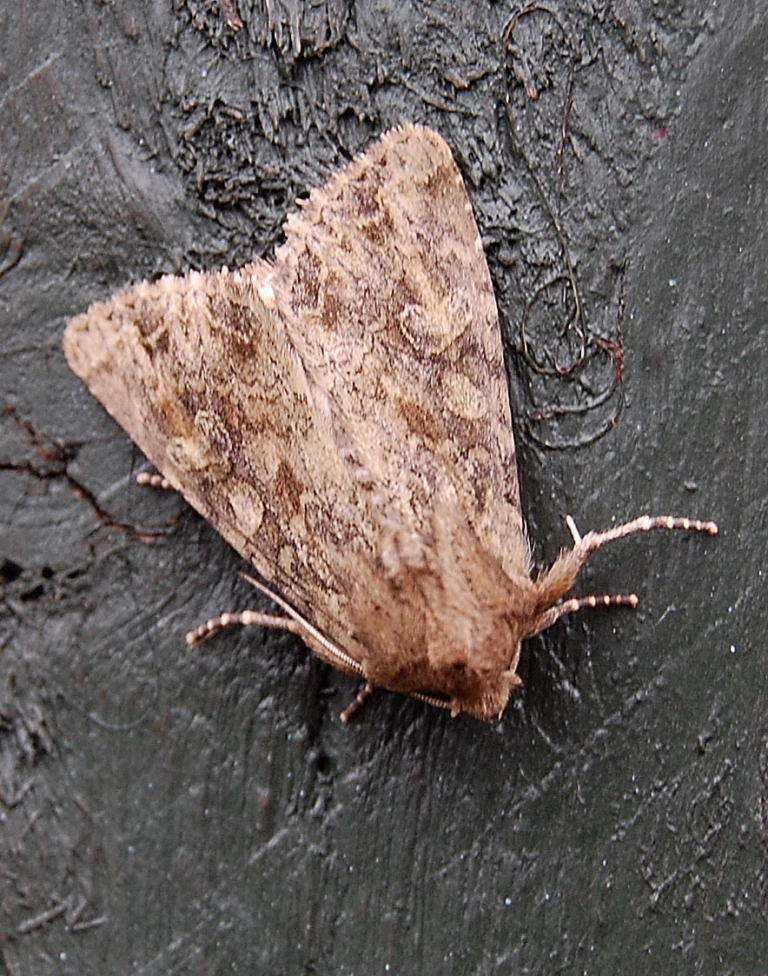
The best evening trapping so far this year, with 5 flame shoulders, 2 poplar hawkmoths and a dagger sp making up the regular visitors. A privet hawkmoth, white ermine and brown rustic were all new for the year whilst a tawny shears, shown below, was a new one for the garden. A well marked specimen that takes the garden total to 257 species. My target to reach 300 this year now seems rather distant after what has certainly been the worst spring and early summer for moths on record.
tawny shears


tawny shears

brown rustic

white ermine

privet hawkmoth

flame shoulder

Friday, 7 June 2013

Moth round up

At last, a few new moths to report, if only new ones for this year. No new ones for the parish but with predicted warmer evenings over the weekend, something good may turn up in the trap. After some warm days (20C+) it was a shame that evening temperatures dropped markedly, meaning no double figure counts of moths in the trap. However, a nutmeg and rustic shoulder knot were taken on Wednesday whilst Thursday brought a pale prominent, red twin spot carpet and buff tip, meaning a very low figure of 48 species for the year. Last year, in what many considered the worst year for a long time, the garden count was 83! A big difference.
rustic shoulder knot

red twin spot carpet

buff tip

pale prominent.

Monday, 3 June 2013

Lakenheath Fen and Weeting Heath

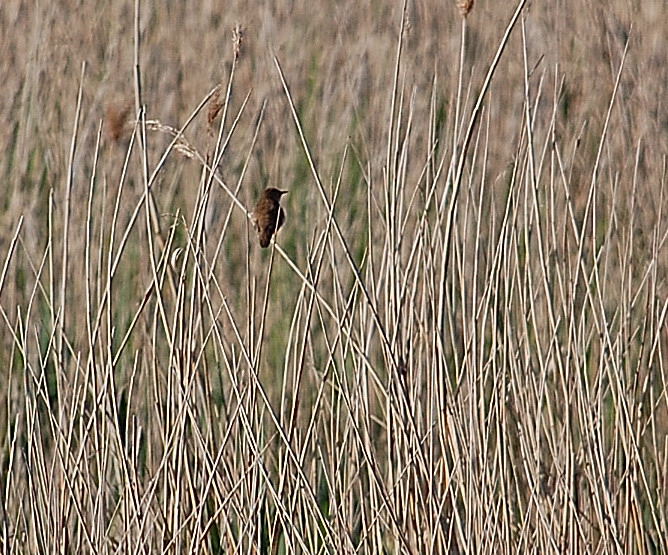
An early start for Lakenheath Fen today meant I was on the reserve before 6.30a.m. Plenty of whitethroat and reed warblers evident as I walked on to the main path via the closed visitors' centre. My targets were savi's warbler, golden oriole and red footed falcon, but plenty of other birds were about to make it a worthwhile visit. A great crested grebe on the first open water was in good plumage as a great spotted woodpecker and pheasants called. Cetti's warblers were also in fine voice and after about 10 minute walk the first of two grasshopper warblers were heard. This bird has a similar call to the savi's only faster and higher. The savi's also has a habit of singing from the top of reed beds whilst grasshopper warblers prefer sedge and greener vegetation. A walk past a stand of trees gave up the first target as a golden oriole, male, flew very briefly. Superb flash of yellow but then gone. A cuckoo flew over a reed bed before the unmistakable sound of a savi's. There, in the distance was a small brown bird, very like a reed warbler in looks, reeling away. Good views as it sang continuously for about a minute.
great crested grebe

male reed bunting

female reed bunting

great spotted woodpecker

savi's warbler

reed warbler
 
A quick scan over the final fen from the benches gave up some more reed warblers, a marsh harrier and distant hobby. Cormorants and a few greylag and canada geese made their way overhead as more cuckoos called. 2 bitterns boomed from the bed and one was briefly seen in flight, for no more than 200 yards.
No sign of the rare falcon and enquiries later at the centre led to me being informed that it may still be about but that it had been in a spat with a local sparrowhawk the previous evening and so may well have gone elsewhere.
Once I had re checked the woods for anymore orioles I left and made my way 5 miles up the road to Norfolk Wildlife's Weeting Heath Reserve. Here, from the west hide, were good but distant views of stone curlew with 2 chicks. By now the temperature was 17C so heat haze made photography virtually impossible.
stone curlew in front of hide!!

reed warbler

whitethroat.

 
All in all, a wonderful morning and just an hour away. The savi's, oriole, bittern and stone curlew all go on to the year list, which I shall update at the end of this week.

Sunday, 2 June 2013

Walk to Standon and back

An 8 mile wander to The Star in the next village East of Little Hadham for refreshment. Reasonable butterfly numbers including orange tips, peacock, large white and speckled wood.
A sparrow hawk overhead had all the martins screaming and whitethroats, chiffchaffs and blackcaps were in good numbers. However, a stunning male yellow wagtail near Broken Green was the undoubted highlight. Several red legged partridge, skylarks and finches and tits also observed. A wonderful walk in good sunlight.
yellow wagtail

yellow wagtail, male at Broken Green

speckled wood

Canary Wharf and The Shard from 32 miles away.

large white

female orange tip sending out pheremones that attracted several males.

rather battered peacock

This is the footpath?

muntjac, Westland Green

Moth morning

Best night so far this year, but still not great.
A chinese character was new for the year whilst a waved umber, 5 brimstones, 2 common swifts, 2 white spotted pugs and and, as yet, unidentified pug made up the macros.
A garden pebble, Epiblema cynosbatella and a crambidae sp were also present. Hopefully, things will now continue to get better.


chinese character

waved umber

Saturday, 1 June 2013

Evening wander

A quick wander around Hadham Hall to see if the barn owls have reared any young this year. As I approached one appeared from the long grass carrying a mouse/vole. Several quick shots but I was in the wrong position and the light was not good. Hence, rather disappointing results. A few other views but no evidence that they returned to the next hole with food. However, it seemed only one bird was out so the female maybe on eggs.
Swifts, swallows and house martins over the lagoon whilst reed buntings, yellowhammers and linnets were calling from the hedgerows and a juvenile green woodpecker was inspecting a telegraph pole. A pair of tufted duck came into spend the night on the lagoon, as shown below.
Hopefully, with the temperature presently over 12C it could be the best moth night of the year. That is, if it remains overcast as it is at present.


Thursday, 30 May 2013

Amwell visit

A quick morning trip to Amwell to make up for the postponement of my planned trip to Lakenheath Fen Reserve. Weather was so poor at 5.15a.m. I deceided against going as the red footed falcon, golden oriole and sav's warbler would not be showing well on a wet and windy day. Maybe next week?
Amwell remained as it has for a fair few weeks: little ringed plover, redshank, little egret, lone out of season wigeon, common terns etc. Plenty of whitethroat, sedge warbler and reed warbler singing, plus reed bunting.
common tern

common tern

moorhenchick, only few days old.

Moth species: a running total

Below are the moths taken already this year. A very low total for this time of year. Weather continues to be dreadful with only a couple of nights in the whole of 2013 where I have trapped more than 20 insects, never mind 20 species!
By this time last year I had trapped 71 species; here is this year's list. (red shows a new moth for me)

dark chestnut, winter moth, pale brindled beauty, grey shoulder knot, march moth, early moth, red chestnut, chestnut, common quaker, oak beauty (10 sp) hebrew character, shoulder stripe, twin spotted quaker, clouded drab, spring usher, dotted border, satellite, herald, early grey, brindled pug, (20 sp) oak tree pug, grey pug, small brindled beauty, early thorn, streamer, engrailled, common swift, garden carpet, white spotted pug, scorched carpet (30 sp), brimstone, waved umber, poplar hawkmoth, latticed heath, pebble prominent, lesser swallow prominent,  pale tussock, heart and dart grey/dark dagger.

A total of 39 species indeed highlights the chronic weather conditions.
dark chestnut

grey shoulder knot

streamer

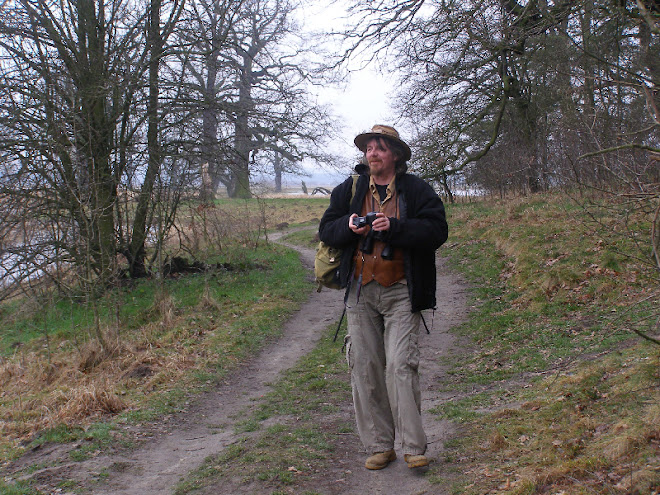
This is me

This is me
At the end of another Norfolk Coastal footpath walk. 47 miles, 3 days 99 species of bird. September 2009

Caley Wood view

Caley Wood view
sunshine through the canopy 29.05.08

A walk along the Warta Valley, Poznan, Poland. Feb 2007

A walk along the Warta Valley, Poznan, Poland. Feb 2007
Best birds on this walk: black and middle spotted woodpecker and short toed treecreeper

About Me

My photo
A primary school teacher for 30 years, I retired from teaching in July 2009 to set up my own science enhancement and communication company. The Primary Works offers science clubs, workshops and staged science shows nationwide. I have always been interested in bird watching since my early years. Apparently my first tick was after inquiring about a chaffinch and then receiving the Observer book of birds. By the age of 9 I had moved on to Tory Peterson's collins guide and was now involved on YOC birding holidays to Northumbria, Essex coast, Slimbridge and Yorkshire. My twitching rule is that I will willingly travel 1km for each gram the bird weighs. However, I have had many rarities just by being in the right place. I have travelled widely throughout Europe and also visited Australia and Sri Lanka. In 2016 I spent time at Portland Bird Obs and two trips to Aviero, Portugal. 2017 found me back in Sri Lanka in Feb/March, then July and back for New Year's Eve celebrations in December. Also returned to The Camargue in May for a 4 day trip. Few plans for 2018, but nothing yet booked apart from a trip to the IOW.

Grey heron

Grey heron
Over the allotment 28.09.08

Southern Hawker

Southern Hawker
Ridge footpath 27.08.08

Juvenile green woodpecker (17.08.08)

Juvenile green woodpecker (17.08.08)
Note the stripes, denoting a bird fledged this year.

common blue

common blue
Ash Valley G.C. 15.08.08

Indian balsam (impatiens glandulifera)

Indian balsam (impatiens glandulifera)
River Ash

azure damselfly

azure damselfly
River Ash 28.07.08

marbled white

marbled white
Discovered at Westland Green 22.07.08

ruddy darter

ruddy darter
Bush Wood 21.07.08

honeysuckle 19.07.08

honeysuckle 19.07.08
growing in hedgerow in Chapel Lane

cinnabar moth caterpillar

cinnabar moth caterpillar
Photographed on ragwort 19.07.08

Bittersweet

Bittersweet
Study of petals 11.06.08

male yellowhammer

male yellowhammer
08.06.08

common blue butterfly

common blue butterfly
06.06.08

River Ash

River Ash
looking south from the bridge at Hadham Ford

Common poppy (papaver rhoeas)

Common poppy (papaver rhoeas)
in rape field 29.05.08

Caley Wood sunshine

Caley Wood sunshine
29.05.08

Millenium Wood fox

Millenium Wood fox
24.05.08

common comfrey (symphytum officinale)

common comfrey (symphytum officinale)
06.05.08 banks of the River Ash

Garlic Mustard or Jack by the Hedge,(Alliara petiolata)

Garlic Mustard or Jack by the Hedge,(Alliara petiolata)
flowers, leaves and fruit edible . Good in salad and pesto

April showers

April showers
Double rainbow 30.04.08

Caley Wood bluebells

Caley Wood bluebells
22.04.08

Yellow Archangel

Yellow Archangel
Chapel Lane (20.04.08)

sunlight 16.04.08

sunlight 16.04.08
looking south west from Bush Wood

snowy buds

snowy buds
06.04.08 in Bush Wood

Looking north west

Looking north west
05.04.08 evening shower approaching

Back Garden

Back Garden
Easter Sunday (23.03.08)

Brick Kiln Hill

Brick Kiln Hill
Looking east (23.03.08)

No play today

No play today
The 2nd hole at Ash Valley golf course

Teasel head

Teasel head
Bush Wood (21.03.08)

Reflections

Reflections
daffodils at Bush Wood pond (21.03.08)

Swollen River Ash

Swollen River Ash
The river at the bottom of Winding Hill 16.03.08

Daybreak over the chapel

Daybreak over the chapel
Thursday 13th March

Wild daffodils (narcissus pseudonarcissus)

Wild daffodils (narcissus pseudonarcissus)
growing in Bush Wood

January snowdrops

January snowdrops
Banks of River Ash, north of Much Hadham

Good Moon

Good Moon
From garden 24.01.08

Village Green

Village Green
Looking east towards Acremore Street

Looking south before Hadham Ford

Looking south before Hadham Ford
rare January blue sky

Useful sites

The following are some useful websites that may interest readers of this blog.
Firstly, Bishop's Stortford Natural History Society http://bsnhs.webplus.net/

Fellow birder, Gary Whelan's blog. Gives reports from our trips out together plus reports from his trips abroad. http://hairybirders.blogspot.co.uk
http://www.hertsbirdclub.org.uk/ The official herts bird club website. Frequently updated, listing bird sightings around the county. Offers links to many other websites. Both of these sites also offer links to yahoo discussion groups.
http://www.birdforum.net/ An international site. You can enter as a guest but become a member( free) to post comments, bird sightings and just about anything to do with wild birds. Good news updates, classified section for binoculars, cameras etc.
http://www.guidedbirdwatching.com/ A new site set up where you can contact people worldwide who will help you find good birds in their country. UK section being set up presently.
http://www.britainsbirder.co.uk/
Fellow birders blog. Strtford resident, Graeme Smith regulary birds the area south of Stortford as well as around Spellbrook and the River Stort from Spellbrook to Twyford Locks. Some superb bird photography: Graeme uses a digital camera attached to his powerful telescope to get detailled images of the birds he sees. Well worth a browse.
Two local sites that may be of interest can be found at
http://www.thehadhams.com/ www.thepelhams.net/content/section/12/139/

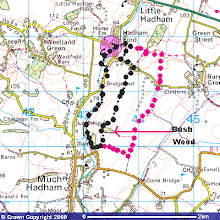
South Easterly walk

South Easterly walk
black, normal, red extended walk

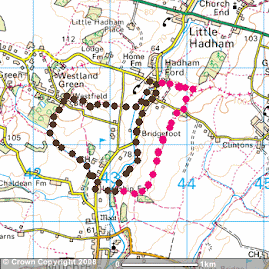
South Westerly route.

South Westerly route.
Black usual, red extended

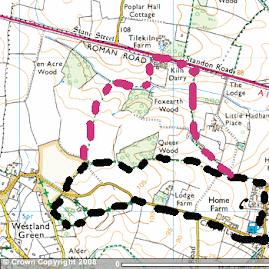
North Easterly walk

North Easterly walk
black short, walk. Red, extended

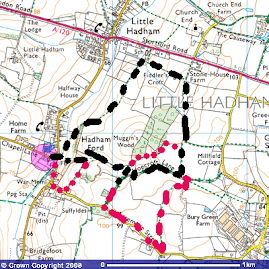
North West Patch

North West Patch
black route regular. Red route the extended wander