Friday, 30 April 2021

Amwell and Rye Meads visit

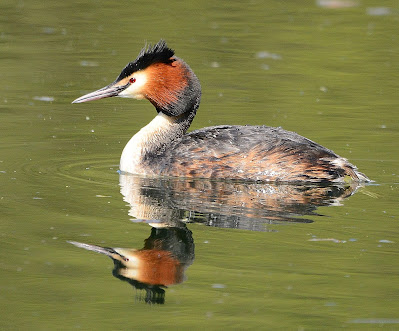
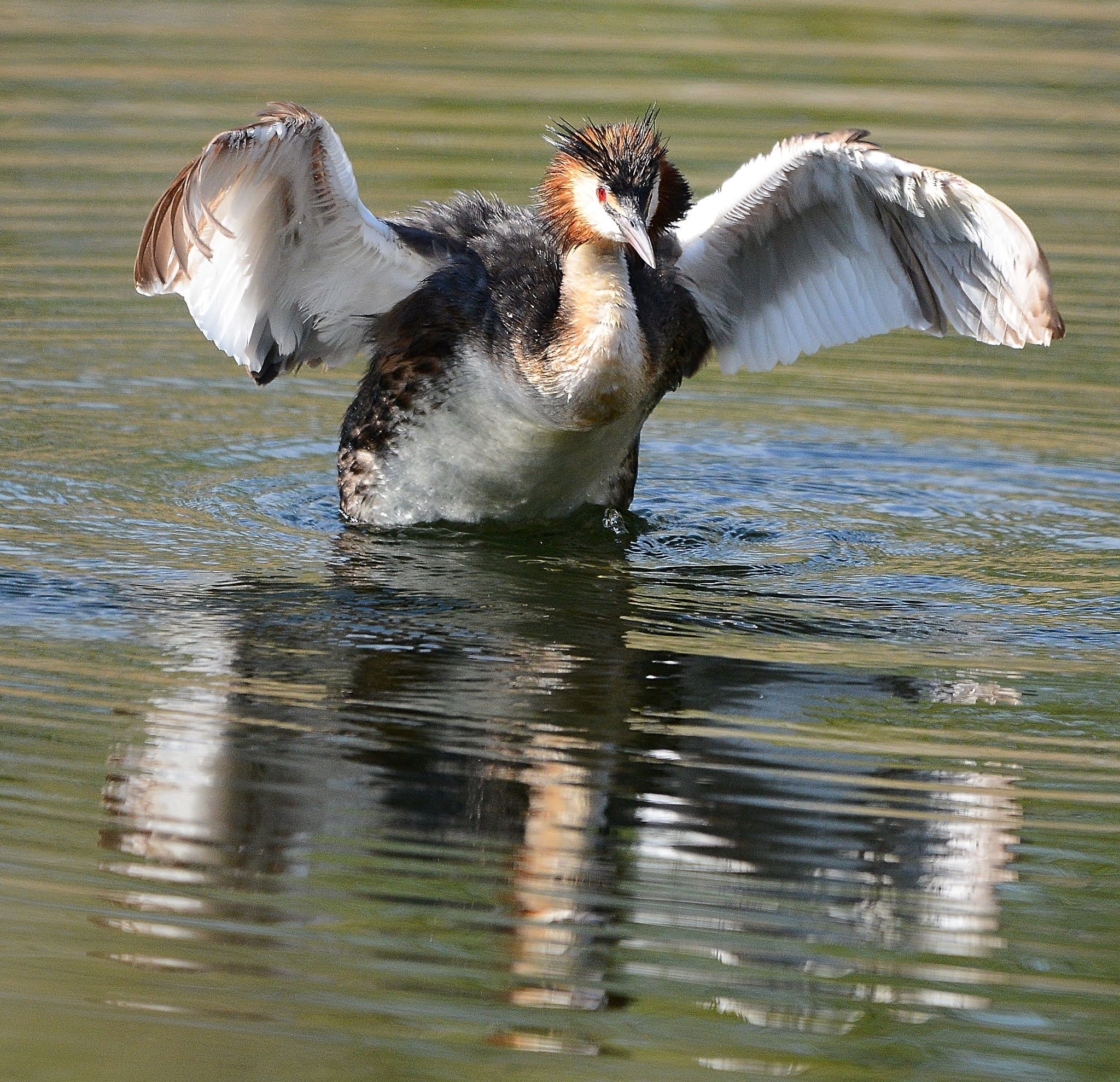
 Started at Amwell in good light. Not too much of note from the Viewing point so wandered off to check the path towards Hollycross Lake. On the shingle at the end of Tumbling Bay came across a Canada goose on a nest with a single gosling already hatched. Made to a few pleasant shots with reflections. Also, a Great crested grebe showed well for a few photos. Plenty of sedge warblers about but still no cuckoo for me although one was present earlier in the morning. A Little Ringed plover dropped down in front of the Viewing Point before I headed back to the car, encountering a fox in the field near the level crossing.

Off to Rye Meads: coffee and crisps and a flyover Hobby. Camera settings still set for the fox so all wrong. A female blackcap dropped into a nearby tree. Checked the pond dipping area for water vole: none present before I scanned the lake and in amongst the Black headed gulls, a solitary Mediterranean gull. A very distant shot below. Plenty of sedge and reed warblers calling but not showing too well. A male blackcap was more visible along the recently opened seasonal trail but note: all hides closed until 17th May at the earliest. Took the path to the new Kingfisher hide, very impressive hide it is, too, but was held up by a family party of Canada geese sauntering along the path just in front of me. I wasn't allowed to pass them!

Had a pleasant chat with several members of staff before heading home to process (for process, I mean delete) over 250 photos, a few that worked below.

Species list for the morning: A for Amwell, RM for Rye Meads. No abbreviation means both sites.

  1. Great crested Grebe (A)
  2. Cormorant
  3. Grey heron (A)
  4. Mute swan 
  5. Greylag geese
  6. Canada Goose 
  7. Mallard
  8. Gadwall
  9. Pochard (A)
  10. Tufted duck
  11. Red kite (RM)
  12. Common buzzard (RM)
  13. Hobby (RM)
  14. Pheasant (A)
  15. Moorhen
  16. Coot
  17. Little ringed plover (A)
  18. Black headed gull
  19. Mediterranean gull (RM)
  20. Herring gull
  21. Lesser black backed gull (A)
  22. Common tern
  23. Wood pigeon
  24. Collared dove (A)
  25. Swallow
  26. Pied wagtail (A)
  27. Wren (A)
  28. Dunnock (A)
  29. Robin
  30. Mistle thrush (A)
  31. Blackbird
  32. Blackcap
  33. Whitethroat (A)
  34. Sedge warbler
  35. Cetti's warbler
  36. Reed warbler
  37. Chiffchaff
  38. Great tit
  39. Blue tit
  40. Long tailed tit
  41. Magpie
  42. Jackdaw
  43. Carrion crow
  44. Starling
  45. House sparrow (RM)
  46. Chaffinch
  47. Goldfinch
  48. Linnet (A)
  49. Greenfinch (RM)
  50. Reed bunting
  51. Yellowhammer (heard A)
    Blackcap, male

    male Reed warbler

    Family portrait

    Tough route march when you just a day or two old!

    You shall not pass!

    very high, circling Common buzzard

    Common tern

    Peacock

    Sedge warbler

    Distant Mediterranean gull

    Magpie

    female blackcap

    Fox at Amwell

    Little ringed plover

    Sedge warbler

    Greylag goslings taking cover.

    Lesser black backed gull

    Yet another, distant sedge warbler

    drake pochard

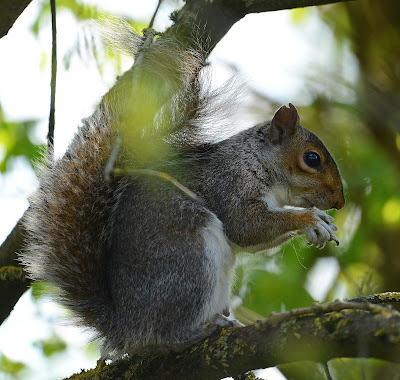
    Grey squirrel

    Canada goose with pleasing reflection

    Series of Great crested grebe shots in good, reflective light.


    Canada goose with one gosling. More to hatch.

    Posing robin

    Vociferous wren

    Female BHG massaging male's neck to encourage regurgitation of food for her!

Friday, 9 April 2021

North Norfolk Visit

 Thursday 8th April found me leaving home early for a return to North Norfolk, my first visit to do some bird watching since December. This represents the longest gap between visits since 2015 when I was not well with Dengue Fever. I normally visit at least once a month, often more frequently. The plan was to start at Kelling and work my way west, finishing the day at Titchwell RSPB Reserve.

After coffee and sausage sandwich in Wells I headed to Kelling Quags. Usual birds here with no migrants in the shape of Wheatear nor waders. Plenty made the day list and several new for year birds. This wasn't going to be a problem being my first visit away from Little Hadham area for 2021.

From here, up to Kelling Heath where I came across Dartford warbler, a pair showing well on top of the gorse near the level crossing but no Willow warblers.

Gramborough Hill on Salthouse beach also failed to offer anything migratory, so off to the East Bank at Cley NWT Reserve. A peregrine flew over and several wader species from the Richie Richardson hide. The hides on the reserve were closed so I didn't venture into the reserve, instead, headed for Cley beach where a Grey phalarope was spinning on the Eye Pool. Still no Wheatears and a search for Yellow wagtails in the Eye Field was similarly unsuccessful. A brief sea watch just added gull species to the lengthening day list.

A quick check along Lady Anne's Drive before buying sandwiches in Blakeney and eating these at Warham Greens before heading further west to Burnham Overy Staithe by the sailing club. Very confiding turnstones here and Black tailed godwit made the list.

Choseley Drying barns added the inevitable Red legged partridge and a distant Marsh Harrier before I arrived at Titchwell reserve at 3.30pm. A new entry system here at present. Need to take your RSPB membership card with you to a "welcome hub" where your details are logged for track and trace. A one way system operates between the car park and the entrance. Coffee and I was off again. Plenty noted: Red crested pochard, Mediterranean gull, a few waders before arriving at the beach. Usual waders along the tide line with good numbers of Oystercatchers in particular. 

Back to check the gulls and anything else on the Fresh Marsh before a final and unsuccessful search for a Black redstart near the car park. I was back in the car by 6.15pm and home soon after 8pm.

Superb day and really great to be back in some of my favourite birding haunts.

Species list:

  1. Little grebe (Titchwell)
  2. Cormorant (Kelling Quags)
  3. Bittern (heard booming, Titchwell)
  4. Little egret (Kelling)
  5.  Great white egret (Holkham Freshmarsh)
  6. Spoonbill (Cley)
    Spoonbill

  7. Mute swan (Kelling Quags)
  8. Greylag goose (everywhere!)
  9. Canada goose (Salthouse duck pond)
  10.  Brent goose (Stiffkey Greens)
  11. Shelduck (Kelling Quags)
    Shelduck at Kelling


  12. Egyptian goose (Kelling Quags)
  13. Mallard (Kelling Quags)
  14. Gadwall (Cley)
  15. Shoveler (Kelling Quags)
  16. Wigeon (Holkham)
  17. Teal (Cley)
    female Teal

  18. Pochard (Cley)
  19. Red crested pochard (Titchwell)
    Red crested pochard

    drake Pochard

    pochard, duck

  20. Tufted duck (Titchwell)
  21. Red Kite (Holkham)
  22. Marsh harrier (Choseley)
    Marsh harrier, female

  23. Common buzzard (Kelling Heath)
  24. Kestrel (Kelling Heath)
    Kestrel, male

  25. Peregrine (Cley)
    Peregrine falcon, male

  26. Red legged partridge (Choseley)
    Red legged partridge

  27. Pheasant (everywhere)
    Pheasant

  28. Moorhen (Kelling Quags)
  29.  Coot (Cley)
  30. Oystercatcher (Salthouse duck pond)
    Oystercatcher

  31. Avocet (Kelling Quags)
    Avocet

  32. Ringed plover (Titchwell)
  33. Golden plover (Titchwell)
  34. Lapwing (Kelling Quags)
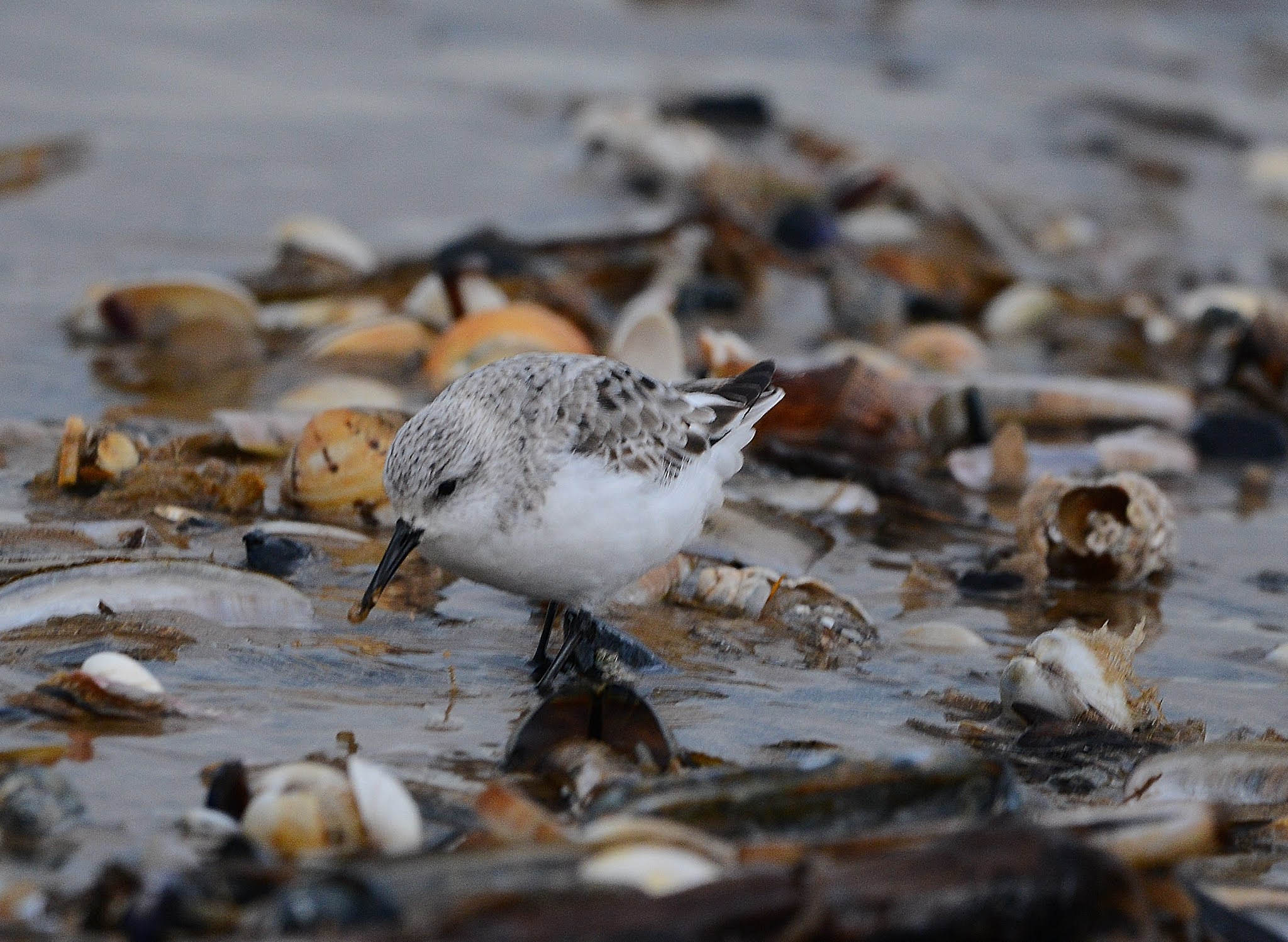
  35. Sanderling (Titchwell beach)
    Sanderling

  36. Turnstone (Burnham Overy Staithe)
    Turnstone

  37. Dunlin (Cley)
    Dunlin

  38. Redshank (Cley)
  39. Black tailed godwit (Burnham Over staithe)
  40. Curlew (Kelling Quags)
    Curlew

  41. Grey phalarope (Cley)
    Grey phalarope

  42. Black headed gull (everywhere)
  43. Mediterranean gull (Titchwell)
  44. Herring gull (Salthouse duck pond)
  45. Lesser black backed gull (Cley)
  46. Wood pigeon
  47. Stock dove (Holkham)
  48.  Collared dove (Wells next the sea Co Op carpark)
  49. Great spotted woodpecker (heard, Stiffkey)
  50.  Skylark (Kelling quags)
  51.  Swallow (Cley)
  52. Meadow pipit (Cley)
  53. Pied wagtail (Cley)
  54. Wren (everywhere)
  55. Dunnock (Kelling Quags)
  56. Robin (everywhere)
  57. Wheatear (Titchwell beach)
  58. Song thrush (Snipe's Marsh)
  59. Blackbird (Holkham)
  60. Blackcap (Kelling Quags)
  61. Dartford warbler (Kelling Heath)
    Dartford warbler

  62. Chiffchaff (Kelling Quags)
  63.  Great tit
  64. Blue tit
  65. Coal tit (Titchwell)
  66. Long tailed tit (Holkham)
  67. Magpie
  68. Jackdaw
  69.  Carrion crow
  70. Rook
  71. Starling
  72. House sparrow (Cley)
  73. Chaffinch (Kelling Quags)
  74. Linnet (Kelling Quags)
  75. Goldfinch (Chseley)
  76.  Greenfinch (Choseley)
  77. Yellowhammer (Choseley)
    Titchwell Fresh Marsh

    Peacock butterfly

    Mediterranean Gulls

    Herring gull

    Greylag 

    Fishing boat, Titchwell

    Black tailed godwit and teal

Wednesday, 3 March 2021

What to Look out for in March

 For bird watchers and all round naturalists March is an exciting month as summer migrants begin to arrive, insects emerge from pupation or hibernation, plants begin to flower and the leaves on the trees begin to open, along with the blossom on prunus and apple species and on willow species. 

Here are a few things to look out for over the next 4 weeks.

On willow trees (sallows) the feathery flowers will be in bud at present and a few warmer days will get them opening. A vital nectar supply for bees during the day and Orthosia moth species by night. If you have a flowering willow nearby, pop out with a torch on a warm night to check for moths such as Common quaker, Small quaker, Hebrew character and the inappropriately named Clouded drab. Other species also possible.

Common quaker

Hebrew character

Small quaker

On warmer days, usually in the afternoon when temperatures reach their highest a few butterfly species should be on the wing. So far I have recorded both Peacock and Brimstone but these will be joined by Small tortoiseshell and Red admirals. These are butterflies that have hibernated over winter in trees, sheds, outhouses and homes and often a day time temperature in excess of 13C-14C will have them winging around gardens. Very little for them to feed on, so plenty of flying but not so easy to get a photo.

Brimstone, male yellow, female green. 

Red admiral

Small tortoiseshell (top) and Peacock.

There will be both a departure and arrival of birds. Winter visitors such as Siskin, Lesser redpoll, Fieldfare and Redwing can be found in large feeding flocks. The first two finch species are frequently seen on alders, such as along the Stort and at Rushy Mead whilst the thrushes are now feeding on the ground as they will have finished most of the berries that sustained them through the winter. Any open grassland habitat will offer a chance to see these in good number. Over 350 Fieldfare usually congregate on the 9 hole par 3 course at Ash Valley GC. When not hopping along the ground they can be seen on tree tops, the familiar "chack chack" call of the Fieldfare is far ranging. These bird numbers will be augmented by birds such as Blackbirds and Jays that also came across the North Sea, so for a while it may appear on local bird walks that many of the birds have disappeared. 
Birds such as Nuthatch and Coal tit that may have been over wintering in gardens where there were feeders will now be re-locating to woodland areas for breeding.
Gull species will be heading off to their breeding grounds, too, so fewer numbers of these instantly recognisable birds in fields and moving overhead in towns. 

Great Spotted and Lesser spotted woodpeckers will be drumming. This is a territorial method of announcing their ownership of a part of a woodland, not hollowing out a nest hole. Basically, the GSW drums for half the time a LSW does. An old bird watcher I knew back in the 60's and 70's told me if it is still drumming after you have said "Greater spotted woodpecker" then it is an LSW! If you do come across what you think maybe a LSW drumming I would be very interested to hear about it as they are very few and far between around East Herts. Don't worry if you're not sure. Happy to check even if it turns out to be a GSW.
Tawny owls and Little owls will become increasingly noisy after dusk and can offer the best chance of finding them. Barn owls will be feeding before dusk and after daybreak so a drive around country lanes is always a worthwhile activity in March.
The first arrivals are invariably Chiffchaffs and Sand martins. The former will arrive and almost immediately set up a territory by calling their recognizable "zip zap" or "chiffchaff" call. Usually in woodland areas and a warm spring day it will be possible to encounter a fair few calling.
Sand martins are birds of water habitats, similar to house martins but with brown wings and a brown band across the breast. No white rump either, as in house martin. They are usually first seen at Amwell before they disperse to their breeding sites, sandy banks into which they scratch a tunnel. Always a chance of a small party of them moving north up river courses, especially the Stort from Sawbridgeworth to Stortford.
Chiffchaff

Little owl

Barn owl

Siskin

Fieldfare

Redwing (note white eye stripe)


Bee, beetle and bug species will start to emerge and a quick search of any flowers will offer a good chance of finding some species.
The Dark edged Bee Fly is often the first to catch the eye with its long needle like proboscis. A harmless creature and one that will be everyone's garden before the end of the month, if we have some decent temperatures.
Dark edged bee fly

Bees will begin to be noted on blossom of prunus species as well as any early apple blossom but always worth checking any flowering plant for these. Some will be the small Andrena species, of which there are over 50 and pretty tricky to id. Photos really helpful for this. 
Larger bumblebees will be easier to spot and identify. Presently, mainly Queens out of hibernation that will find a regular food source before prospecting for nesting sites. The most common will be Bombus terristris, the Buff tailed bumble bee. In early spring they can be quite passive and easy to get a good photo of for id.
If you have holes in a brick wall or in trees check these for the Hairy footed Flower be trying to squash into them to lay her eggs.
7 spot ladybirds and the black with 2 red spots Pine ladybird are invariably out in March. The former is in huge numbers in my garden, with over 50 counted last weekend in the warmer weather. A few hoverfly species, too should be found on flowering plants and blossom. These tricky to id family of Diptera can be narrowed down to one of just a few species due to how early it is in the year and will probably be Eristalis pertinax, a dark hoverfly with a couple of yellow/orange bands near the thorax. Another possibility is the smaller Episyrphus balteatus The Marmalade Fly. This is banded all the way along the abdomen with tell tale white hoops between the black and the orange.
Bombus terristris, Buff tailed bumble bee

Andrena bicolor, Gwynne's Mining bee


Anthophora plumipes (Hairy footed Flower bee)


Episyrphus balteatus, here caught by a Misumena vatia spider.
 A reasonably easy hoverfly to identify.
Eristalis pertinax hoverfly


Mammals will become more apparent with Muntjac barking heard every night whilst badgers and foxes will be soon with cubs and always a chance of seeing then out in daylight, particularly foxes. 
Hares will be seen in good numbers in the correct habitat with their Boxing antics always amusing to observe. Open grassland is best but they can be found in larger groups on emerging cereal fields, too. 

Finally, the dawn and dusk choruses will increase in tempo as we move through March. A bright early morning start around 6.00 - 6.30am will give a good opportunity to hear: Robin, Blackbird, Song thrush, Mistle thrush, Dunnock, Chaffinch and Goldfinch in good voice. Wrens will join in, too. With a little study the bird and its song can be matched relatively easily.

As always, happy to help with id's of anything folk encounter and if I am not sure, I know several experts who certainly will do. The Stortford Nature FB account was great for this last spring and summer and if we share our findings it will help others identify things as well. Doesn't matter how common you think it maybe, it will be something new for someone here so will be really helpful.


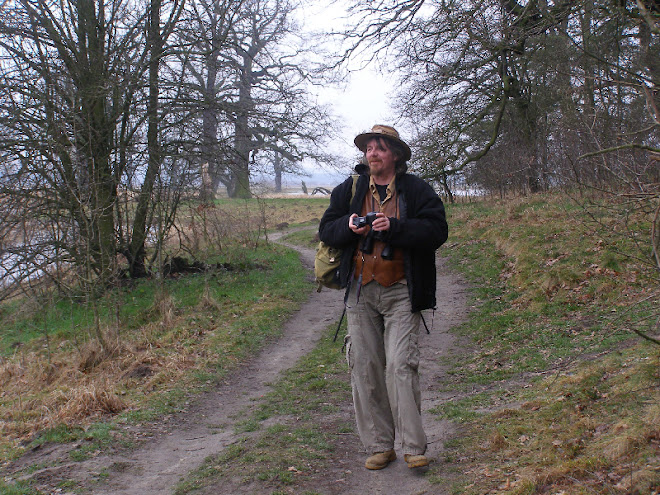
This is me

This is me
At the end of another Norfolk Coastal footpath walk. 47 miles, 3 days 99 species of bird. September 2009

Caley Wood view

Caley Wood view
sunshine through the canopy 29.05.08

A walk along the Warta Valley, Poznan, Poland. Feb 2007

A walk along the Warta Valley, Poznan, Poland. Feb 2007
Best birds on this walk: black and middle spotted woodpecker and short toed treecreeper

About Me

My photo
A primary school teacher for 30 years, I retired from teaching in July 2009 to set up my own science enhancement and communication company. The Primary Works offers science clubs, workshops and staged science shows nationwide. I have always been interested in bird watching since my early years. Apparently my first tick was after inquiring about a chaffinch and then receiving the Observer book of birds. By the age of 9 I had moved on to Tory Peterson's collins guide and was now involved on YOC birding holidays to Northumbria, Essex coast, Slimbridge and Yorkshire. My twitching rule is that I will willingly travel 1km for each gram the bird weighs. However, I have had many rarities just by being in the right place. I have travelled widely throughout Europe and also visited Australia and Sri Lanka. In 2016 I spent time at Portland Bird Obs and two trips to Aviero, Portugal. 2017 found me back in Sri Lanka in Feb/March, then July and back for New Year's Eve celebrations in December. Also returned to The Camargue in May for a 4 day trip. Few plans for 2018, but nothing yet booked apart from a trip to the IOW.

Grey heron

Grey heron
Over the allotment 28.09.08

Southern Hawker

Southern Hawker
Ridge footpath 27.08.08

Juvenile green woodpecker (17.08.08)

Juvenile green woodpecker (17.08.08)
Note the stripes, denoting a bird fledged this year.

common blue

common blue
Ash Valley G.C. 15.08.08

Indian balsam (impatiens glandulifera)

Indian balsam (impatiens glandulifera)
River Ash

azure damselfly

azure damselfly
River Ash 28.07.08

marbled white

marbled white
Discovered at Westland Green 22.07.08

ruddy darter

ruddy darter
Bush Wood 21.07.08

honeysuckle 19.07.08

honeysuckle 19.07.08
growing in hedgerow in Chapel Lane

cinnabar moth caterpillar

cinnabar moth caterpillar
Photographed on ragwort 19.07.08

Bittersweet

Bittersweet
Study of petals 11.06.08

male yellowhammer

male yellowhammer
08.06.08

common blue butterfly

common blue butterfly
06.06.08

River Ash

River Ash
looking south from the bridge at Hadham Ford

Common poppy (papaver rhoeas)

Common poppy (papaver rhoeas)
in rape field 29.05.08

Caley Wood sunshine

Caley Wood sunshine
29.05.08

Millenium Wood fox

Millenium Wood fox
24.05.08

common comfrey (symphytum officinale)

common comfrey (symphytum officinale)
06.05.08 banks of the River Ash

Garlic Mustard or Jack by the Hedge,(Alliara petiolata)

Garlic Mustard or Jack by the Hedge,(Alliara petiolata)
flowers, leaves and fruit edible . Good in salad and pesto

April showers

April showers
Double rainbow 30.04.08

Caley Wood bluebells

Caley Wood bluebells
22.04.08

Yellow Archangel

Yellow Archangel
Chapel Lane (20.04.08)

sunlight 16.04.08

sunlight 16.04.08
looking south west from Bush Wood

snowy buds

snowy buds
06.04.08 in Bush Wood

Looking north west

Looking north west
05.04.08 evening shower approaching

Back Garden

Back Garden
Easter Sunday (23.03.08)

Brick Kiln Hill

Brick Kiln Hill
Looking east (23.03.08)

No play today

No play today
The 2nd hole at Ash Valley golf course

Teasel head

Teasel head
Bush Wood (21.03.08)

Reflections

Reflections
daffodils at Bush Wood pond (21.03.08)

Swollen River Ash

Swollen River Ash
The river at the bottom of Winding Hill 16.03.08

Daybreak over the chapel

Daybreak over the chapel
Thursday 13th March

Wild daffodils (narcissus pseudonarcissus)

Wild daffodils (narcissus pseudonarcissus)
growing in Bush Wood

January snowdrops

January snowdrops
Banks of River Ash, north of Much Hadham

Good Moon

Good Moon
From garden 24.01.08

Village Green

Village Green
Looking east towards Acremore Street

Looking south before Hadham Ford

Looking south before Hadham Ford
rare January blue sky

Useful sites

The following are some useful websites that may interest readers of this blog.
Firstly, Bishop's Stortford Natural History Society http://bsnhs.webplus.net/

Fellow birder, Gary Whelan's blog. Gives reports from our trips out together plus reports from his trips abroad. http://hairybirders.blogspot.co.uk
http://www.hertsbirdclub.org.uk/ The official herts bird club website. Frequently updated, listing bird sightings around the county. Offers links to many other websites. Both of these sites also offer links to yahoo discussion groups.
http://www.birdforum.net/ An international site. You can enter as a guest but become a member( free) to post comments, bird sightings and just about anything to do with wild birds. Good news updates, classified section for binoculars, cameras etc.
http://www.guidedbirdwatching.com/ A new site set up where you can contact people worldwide who will help you find good birds in their country. UK section being set up presently.
http://www.britainsbirder.co.uk/
Fellow birders blog. Strtford resident, Graeme Smith regulary birds the area south of Stortford as well as around Spellbrook and the River Stort from Spellbrook to Twyford Locks. Some superb bird photography: Graeme uses a digital camera attached to his powerful telescope to get detailled images of the birds he sees. Well worth a browse.
Two local sites that may be of interest can be found at
http://www.thehadhams.com/ www.thepelhams.net/content/section/12/139/

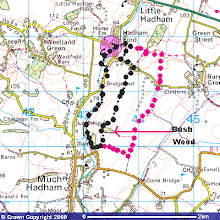
South Easterly walk

South Easterly walk
black, normal, red extended walk

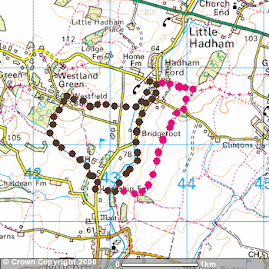
South Westerly route.

South Westerly route.
Black usual, red extended

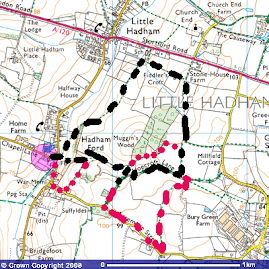
North Easterly walk

North Easterly walk
black short, walk. Red, extended

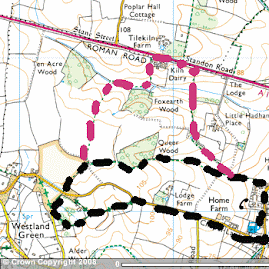
North West Patch

North West Patch
black route regular. Red route the extended wander