Tuesday, 6 October 2020

Amazing day in North Norfolk

 There had been some superb North easterlies pushing birds into North Norfolk at the end of last week and Monday was the first opportunity I had to see what had arrived. I appreciated plenty would have moved on but felt sure there would still be birds about in good numbers. I wasn't disappointed. Leaving home before 5am, coffee at Wells Co-Op at 7, a quick drive down Lady Anne's Drive to check for late owls and then straight to Burnham Overy Dunes along the sea defence as thought the path down from the road may be too much of a quagmire and wet feet early in the day wouldn't be great.

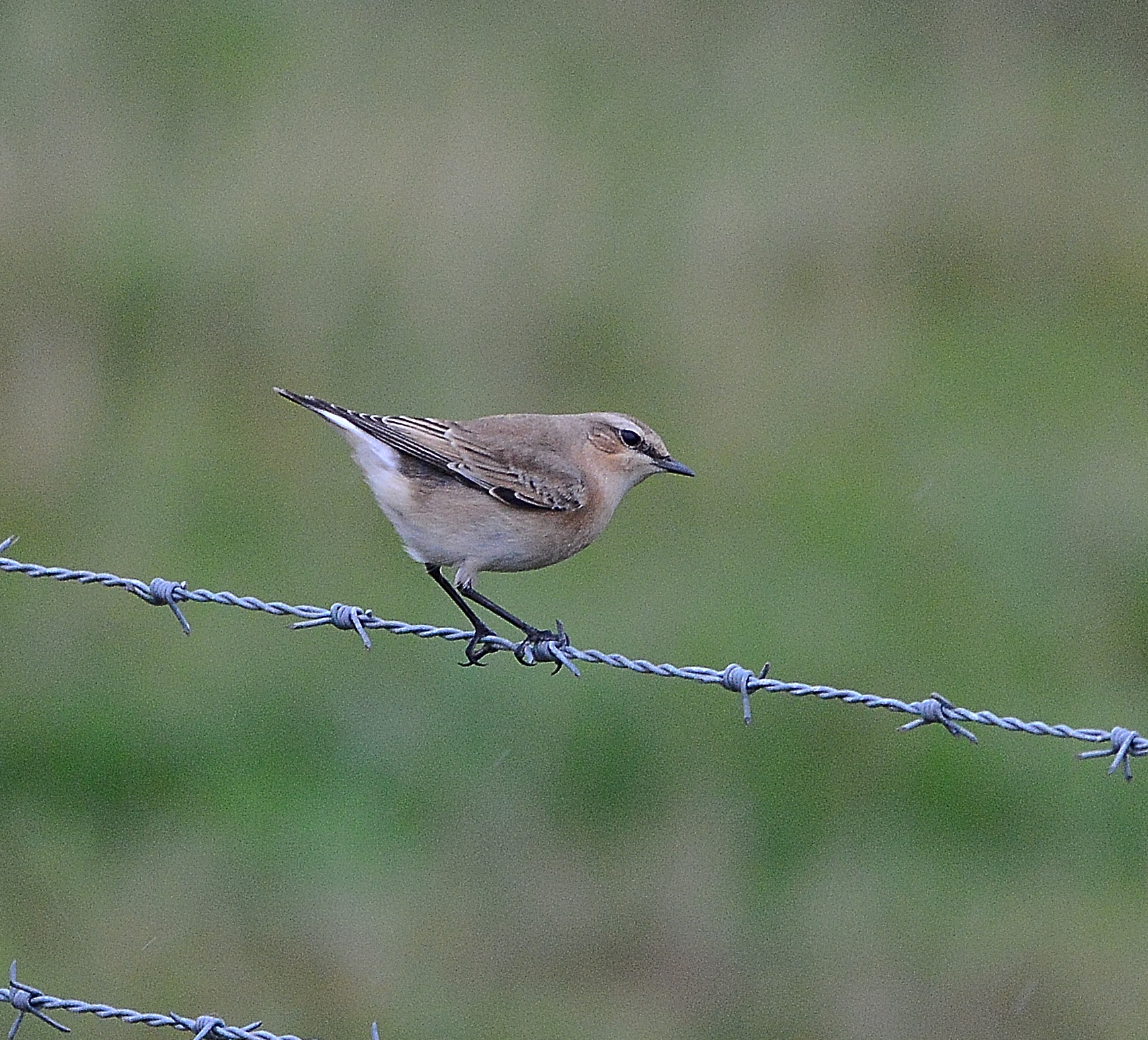
The light was really poor, making photos tricky but I persevered in manual as much as possible. Meadow pipits everywhere, 3 wheatear on the fence and wire, several low flying swallows and a few cattle egret with the cattle. A first for me in Norfolk, cattle egrets that is, not cows!

I arrived at the boardwalk and checked the brambles and apple tree which has held many good birds for me over the decades. A pair of blackcaps skulked here, whilst wrens, dunnocks, blue tits were scrabbling around in the brambles. Nothing too noteworthy in the dunes and marram grass so over the boardwalk to Gun Hill. Meadow pipits everywhere, 100's if not 1000's. I checked some to see if there were any other species such as olive backed pipits, but drew a blank. There are only so many pipits you can look at.

Cormorant flyover and a chiffchaff in brambles also. Several fieldfare were flushed but nothing on the ground as I checked as many bushes as possible. Back to the board walk where a rock pipit popped up before I noted movement under a sueda bush. Just about to dismiss them all as House sparrows when a brambling popped out onto a rock. My first of the season. Constant movement of geese overhead, too

Rock pipit

Little egret

Greylag geese

Distant cattle egret

Chiffchaff

Meadow pipit

Meadow pipit at Gun Hill

Westerly cormorant

Wren

Goldfinch under darkening skies


Male blackcap

Wheatear balancing in the breeze

wheatear and meadow pipit
windswept Reed bunting


Mute swan

A very early morning Goldfinch

Superb Brambling

Once back at the car I headed towards Salthouse, with a plan to work my way back to Wells over the course of the day. I took a short detour to Wighton following reports of a hoopoe. Arrived on site but too many folk for my likening and as non were looking through scopes or binoculars I assumed it wasn't showing at that point, so off to Salthouse.
Here, the skies were threatening. I left the camera well hidden in the car, not wanting to get to Gramborough Hill and be caught in a downpour. This virtually guaranteed either a really good bird would be found or a bird would pose perfectly for a shot. The former happened as there was a red necked phalarope on water to the west of the beach road. As it happened, it was probably too distant for a photo anyway as I tried to get the best views. Very little on Gramborough Hill, plenty of curlew and gulls on the fields, so I headed back, thinking Wells Woods should offer some consolation. I stopped off to check Walsey Hills and Snipe's Marsh but nothing here to add to the list apart from a greenfinch before I parked at the beach carpark, bought 3 hours worth of time and headed off, the skies being clearer so camera in tow.
Blackcaps and chiffchaffs regularly seen as I headed to The Dell. The wettest I have known it for years, with plenty of standing water. Small copper, Wall butterflies and several Migrant hawkers caught the eye, as did a pair of busy Yellow browed warblers flitting through birch. I fired off a few shots before realising I hadn't checked the settings. All hugely over exposed after Burnham greyness. A pied flycatcher flew into trees beyond the Dell and more c]blackcaps. I took the path along which a 1st year red backed shrike had been reported, but no luck for me today. Suddenly, all the lapwings and gulls went up from the adjacent field. I looked skyward and there, high over the woods, a hen harrier, its white rump reflecting in a rare moment of clear sunshine. A hobby flew over at the same time. I tried for some shots of the harrier but just too high to be more than a hugely cropped dot!
Back into the woods between the caravan site and the toilet block. Trees were loaded with birds: goldcrests, goldfinches, Lesser redpoll, Chaffinches, chiffchaffs, blackcaps etc. Now cloudy and dark under the canopy. I arrived at the huge Scots Pine with the rope swing attached. Here, plenty of bramble on the sandy slopes, great for skulking warblers so I took time just to stand and look and listen. Wrens, blackcaps and a chiffchaff popped up before a browner bird showing, in the brief moment it was atop a bramble, a thick white eye stripe, yellow/pale orange legs and feet and a warm yellow colouring under the tail. The breast was a warm yellow colour, too with a white area under the beak. Within 5 seconds it was gone. A Radde's warbler. To confirm it then clicked several times from the depths of the brambles. First I have seen for a few years, my last was here, too.
I arrived back on the path and a kestrel appeared and hovered directly overhead. I shot off photos but it was too close, I had to wind down the lens. It dived into grass right in front of me before flying off. Too close for the camera. This led to chats with several other birders and walkers who had stopped to watch it. One final check through the birches and, in the darkest area of the wood, a redstart popped up and posed just long enough for a snap. I pushed the ISO right up to compensate.
By now, my 3 hours were almost up. I headed back to the car, checked the boating lake but just a Little grebe made the day list.
Migrant hawker

super Redstart

Female blackcap enjoying blackberries

Goldcrest

Wall butterfly

Wall underwings

Nectaring upon knapweed

Another chiffchaff

Overhead kestrel
Being watched


same bird

Male blackcap highlighting photo problems of birds hiding in brambles on a cloudy day in a wood

Pleasing kestrel shot, another bird 

Greenfinch
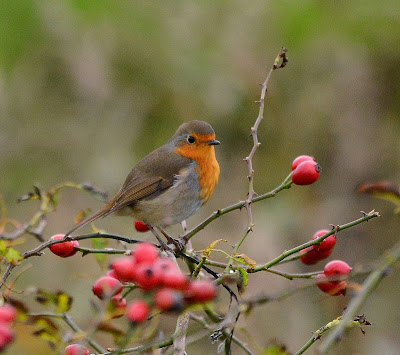
Robin

I got to the car 7 minutes after my time expired but all was fine so off to park at Stiffkey High Creeks campsite and take a wander along to the Whirligig roundabout along the coastal footpath. Had a chat to several birders who had walked from Morston to the east and reported very little apart from waders and wildfowl at Stiffkey Fen and a few bits and bobs, so I stuck to my plan of heading west. I too didn't find too much and nothing to add to the list. I scanned Warham Greens for spoonbill but only Little egrets. No signs of a merlin and probably too early for hen harriers to come into roost. I then caught sight of a few blue tits and a female blackbird flying irritatedly around some ivy. Worth a check and sure enough, a magnificent Tawny owl was tucked away. Super to see. I checked the marshes once again and by now, at around 5.30pm the light was getting really poor and some cars had headlights on. Time to pop up to see if the hoopoe was still present before cutting through to Egmere and home. 
Distant redshank in the last of the sunshine

Black headed gull in the gathering gloom
Golden plover flock


A watchful Tawny owl

Wonderful to see

Think I'm being watched

Looking east

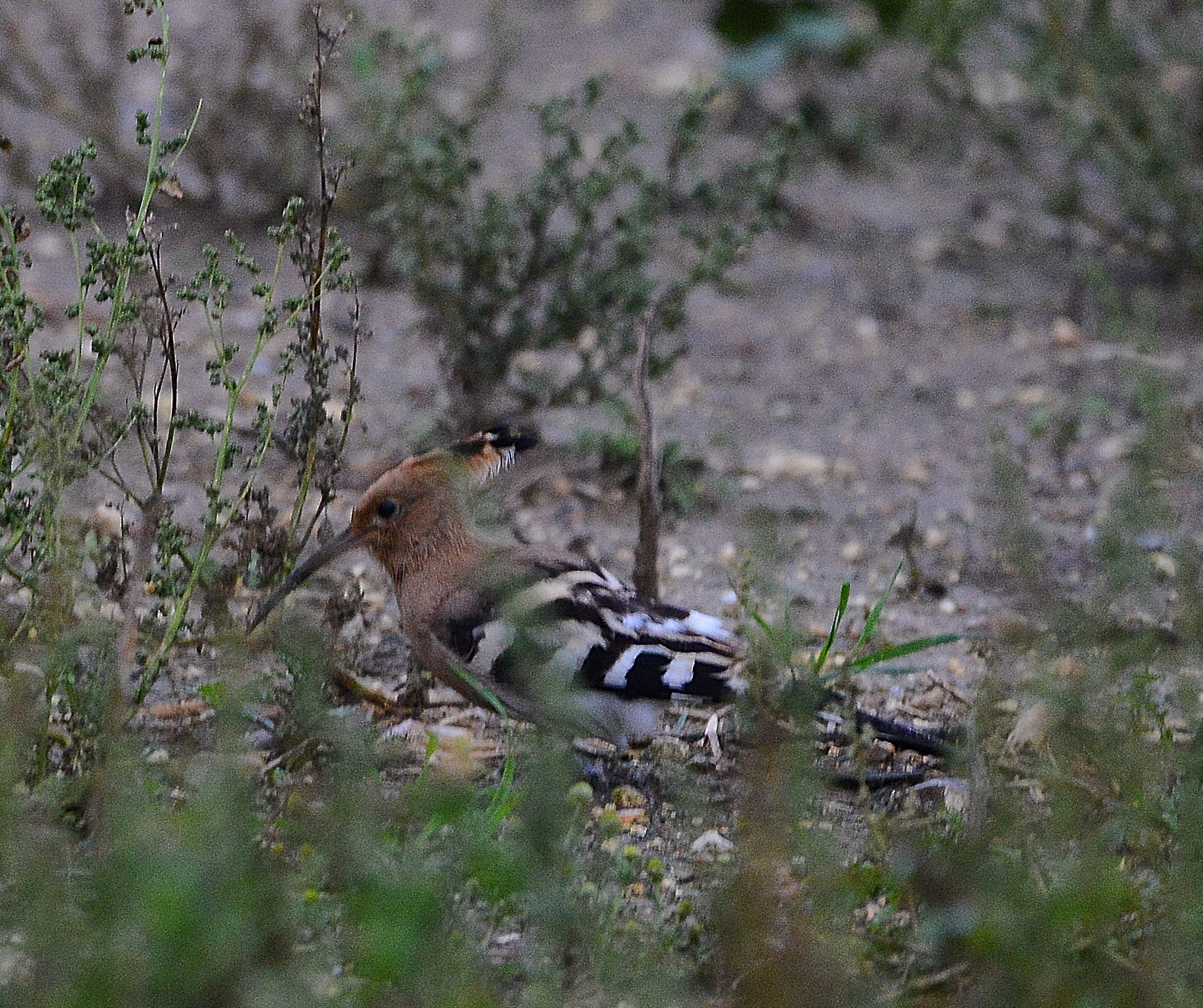
I arrived at Wighton and only 3 other birders present, so plenty of room. The hoopoe was feeding and probing around in tall weeds near a dung heap. I messed around with settings to try for some shots but by now cricketers would have certainly left the field for bad light. I stretched to ISO a little and had some success, if somewhat grainy. My first Norfolk hoopoe after one at Dungeness and the well watched one I found in Bishop's Stortford in 2007. Great to see and a fitting finale to a superb day. 
Hoopoe in semi darkness


Species List.

  1. Little grebe
  2. Cormorant
  3. Cattle egret
  4. Little Egret
  5. Grey heron
  6. Mute swan
  7. Pink footed goose
  8.  Greylag goose
  9.  Canada goose
  10.  Shelduck
  11. Egyptian goose
  12. Mallard
  13.  Gadwall
  14. Shoveller
  15.  Wigeon 
  16.  Red kite
  17.  Marsh harrier
  18.  Hen harrier (female)
  19.  Common buzzard
  20.  Sparrowhawk
  21.  Kestrel 
  22.  Hobby
  23.  Red legged partridge
  24.  Grey partridge
  25.  Pheasant
  26. Moorhen
  27.  Coot
  28.  Golden plover
  29.  Lapwing
  30.  Redshank
  31.  Red necked phalarope
  32.  Curlew
  33.  Black headed gull
  34.  Herring gull
  35. Lesser black backed gull
  36.  Wood pigeon
  37. Collared dove
  38.  Tawny owl
  39.  Hoopoe
  40. Skylark
  41.  Swallow
  42.  Rock pipit
  43. Meadow pipit
  44.  Pied wagtail
  45.  Wren
  46.  Dunnock
  47.  Robin
  48.  Redstart
  49.  Wheatear
  50.  Fiedlfare
  51.  Blackbird
  52.  Blackcap
  53.  Cetti's warbler
  54.  Chiffchaff
  55.  Radde's warbler
  56.  Yellow browed warbler
  57.  Goldcrest
  58.  Pied flycatcher
  59.  Great tit
  60. Blue tit
  61. Coal tit
  62.  Long tailed tit
  63.  Bearded reedling
  64.  Magpie
  65.  Jay
  66.  Jackdaw
  67.  Carrion crow
  68.  Rook
  69.  Starling
  70.  House sparrow
  71.  Chaffinch
  72.  Greenfinch
  73.  Goldfinch
  74.  Brambling
  75.  Linnet
  76.  Lesser redpoll
  77.  Reed bunting
Certainly a long way short of a good list by species count but not everyday you get: Red necked phalarope, Hen Harrier, Redstart, Pied flycatcher, Hoopoe Tawny owl and Radde's warbler, so, as I did a fortnight ago, settle for quality rather than quantity

Wednesday, 30 September 2020

Autumnal and Winter birding around Bishop's Stortford: Part 4

 Final part of this brief guide to birdwatching around Stortford. Today, places further afield that offer a really good opportunity to build a good day list.

Amwell Herts and Middlesex Wildlife Trust Reserve:

https://www.hertswildlifetrust.org.uk/nature-reserves/amwell

This reserve is found between Stansted Abbots and Ware, old gravel pits adjacent to the River Lea. Presently the hides are closed but still a good viewing point to look out over the main lake with mud, reedbeds and islands.

Birds to be found through the winter: cormorant, mallard, shoveller, wigeon, tufted duck, gadwall, teal, coot, moorhen, lapwing, black headed gull, herring gull, lesser black backed gull, grey heron, little egret, reed bunting, finches and tit species including siskin and redpoll, Canada goose, Egyptian goose, greylag goose, shelduck, 

However, as winter temperatures become colder this reserve can pull in some good wintering wildfowl. Goldeneye are annual visitors, sometimes in reasonable numbers. Even more impressive is that most years, often after a really cold snap in The Netherlands, smew can be found, usually in the deeper water to the right of the viewing point and often in front of the Gladwin Hide, presently closed. Another good winter visitor will be goosander, often found on the lake further north. 

Birds of prey include Common buzzard, Red Kite and Peregrine throughout the winter along with resident kestrel and frequent sparrowhawk. From the viewing point, scan the wooded hills in the distance where also occasional ravens can be found.

The highlight bird of winter is the bittern. Rarely seen but its "booming" call can be heard in the reedbeds. If icy, it can be seen, along with the secretive water rail coming out to wander on the ice. 

Once finished at the viewing point carry on along the path left after the bridge. Siskins and redpolls feed in these trees. There is a fork in the track. Right takes you to another lake that can be viewed from the old Buntigford railway line where pochard feed along with other wildfowl. Then, head back to the river and turn right. After half a mile there is access to another worked out gravel pit near the lock gates and lock keepers cottage. This is where goosanders can be found, usually near the overhanging trees.. Retrace your steps and cross the river by the footbridge into a small wood. Alder trees here can be full of siskins and, as always, worth checking for the lighter and greyer Lesser redpoll.

Wrap up warm and take the binoculars as there is always plenty to find.


Shelduck

Female or first year smew at Amwell

Stunning male adult smew at Amwell several winters ago


Hanningfield Reservoir:
https://www.essexwt.org.uk/nature-reserves/hanningfield

Found between Chelmsford and Wickford and about an hours drive. Visitors' Centre, good paths and plenty of winter wildfowl including goosander, pintail, shoveller etc as well as occasional smew.  Definitely a binocular day but there is a Causeway over the western corner of the reservoir and this is best place to encounter goosander. Used to be able to park on this road and watch from the comfort and warmth of the car. Not sure of that is still the case, but a pavement on both sides mean parking nearby and a wander back. Egrets and herons here, too. 

Very flat here and with a northerly breeze on a cold winter's day it can be nerve bitingly cold!! Wrap up warm.

Little egret

Stocker's Lake, near Rickmansworth:

https://www.hertswildlifetrust.org.uk/nature-reserves/stockers-lake

A super place this, just off the M25. a well established path all the way around with hides (presumed closed.) Star birds here are wintering wildfowl such as goldeneye, goosander, red crested pochard as well as plenty of ring necked parakeets. 

The path here offers great views of the lake. At the wooded end near the swimming pool carpark there are trees growing from the water and it is usually here that the goosanders can be found. Also, regular sightings of Lesser spotted woodpecker.

Highly recommended for a half day trip.

A pair of male red crested pochard, not showing their bright red bill


Tyttenhanger, near St. Albans:

https://www.hnhs.org/herts-bird-club/site/tyttenhanger-gravel-pits

Accessed off the A414 between Hatfield and St. Albans. A large site with old gravel pits, reed beds, woodland and grassy areas. The last few Hertfordshire tree sparrows can be found here, where there is a specific feeding station to keep them local. Numbers monitored regularly. Some waders overwinter here along with occasional whooper and Bewick's swans . The woodland on the far side gives good, if distant views of the lakes and then there is a footpath causeway over towards the farm where golden plover usually roost in good numbers. This is a regularly watched site and for up to date information go to https://www.hnhs.org/herts-bird-club/recordviewarchive to see what is present. This page on the Herts Bird Club updates throughout the day. Here it is at 10.30am on Wednesday 30th Sept. There are several locals who bird this site daily, as there are at Amwell so information is usually very up to date

Bewick's swan (these from a long walk in Poland: cold and foggy!)
Note: Bewick's have much more black on the beak than the similar Whooper swan.


Pair of goosander, drake right. Another from Gdansk Bay, Poland

Therfield Heath near Royston:


Not only is this great for birding, it can be a wonderful walk, too. If parked in the car park next to Royston rugby club, walk up the incline into woods and head left. There is a footpath here that takes you out on to open fields where the farmer is extremely pro active in encouraging birds by planting huge areas of seed bearing crops of which he often leaves for the winter birds. Consequently, huge numbers of finches, particularly linnets and goldfinches. This attracts birds of prey and over the last few winters there have been reports of Hen Harrier over wintering along with the small Merlin, Sparrow hawk, Common buzzard, Red Kite, Peregrine and, a few years ago a very secretive Long eared owl. Short eared owls are more common and I shall flag this spectacular bird on the Stortford Nature FB pages if, or when, they appear.  Well worth a visit.
Short eared owl

SEO fly past. Superb bird


Rainham Marsh RSPB:

Just off the M25 before the bridge. A well planned reserve with, I believe, the visitor's Centre being closed at present. Do note, this reserve is only open as from 9am. A path takes the visitor all the way around with plenty of hides and viewing screens, the former, I presume, closed at present. Great for geese, wildfowl, birds of prey and over wintering waders. As with all the above, highly recommended.
Early morning redshank at Rainham Marsh


Other sites are, of course worth visiting and winter, for me, is not complete without several trips further afield to such places as North Norfolk, Dungeness, Frampton Marsh, Oare Marshes and Cliffe RSPB reserve just over the Queen Elizabeth M25 bridge. 
 If anyone requires further details on any of these sites, drop me a message. Happy to help. 

Sunday, 27 September 2020

Autumnal and Winter Birding around Bishop's Stortford: Part 3

 Today's habitats are all a little further afield and may require either a long walk or a drive. 

Stansted Airport Lagoons:

Take the old road to Takeley from the M11 roundabout. After entering Takeley Street there is a layby on the right in front of a row of bungalows just before the turning to Hatfield Forest and the Green Man pub. Park here and walk past the pub until you reach the last building, Primo, a tile company. Right next to this is a footpath which takes you into a field. After 100 yards a footbridge over the stream into a small copse. The path forks, take the left hand one that emerges by a water treatment installation, up the slope and the 3 lagoons are in front of you. A tarmac track to the right, or a grass wander to the left. Signs state no walking along the path through the middle. I have wandered along here and normally no problem but occasionally a chap in a yellow airport Range Rover appears to tell you to go back. If there are plenty of Canada geese present he may be there already as he warns the flight controllers if the geese are flying off towards the runway. Worth asking for permission to use the centre track. However, with binoculars, all three lagoons can be viewed from the permissive areas.

Mainly a waterfowl site with Mallard, Coot, Little Grebe, Teal, occasional Wigeon and Shoveller, Gadwall pairs, Tufted duck and Mute swan. However, always worth checking the water's edge for small waders, particularly Snipe and Green sandpiper. Over the years, many good waders have been found here, only last year I encountered a Wood sandpiper during September migration. This is the best time for the lagoons but once winter has established itself, many other species are possibilities.

By the water treatment works there is often a Grey wagtail. This usually feeds on the muddy bank near the sluice at the end of the lagoon on the left. Approach quietly for good views. Gull species can also be present along with noisy Canada geese and Greylags. Magpies and Jays frequent the trees that encircle the site where there are also Goldfinches, Chaffinches, Reed buntings, Linnets and always a chance of an over wintering Chiffchaff or Blackcap.  

Two years ago a Greenshank overwintered on the back right hand side lagoon. Little egrets are regular visitors, as are Grey herons. If we get a really cold snap always worth checking the water as it can remain ice free. To keep the water well oxygenated there are pumps installed, rather like a huge jacuzzi. These come on at regular intervals and tend to stop the water icing over. Always possible that wildfowl from other sites that have iced over will drop in here such as Pochard, usually the well plumaged male. Female Pochard tend to migrate further south to The Camargue and the Iberian peninsula, males don't seem to go so far. The thinking behind this is that the males can return to the breeding grounds earlier and establish a territory before the arrivals of the female from their Winter sun holiday.

Pied wagtails and Meadow pipits can be watched on the stretches of mud at the far end of the two larger lagoons. Always worth a good scan across these areas as there maybe small waders present, too. 

A good site and one that can be covered fairly quickly. Early mornings are best but there will be birds present throughout the day.

Teal

Aubrey Buxton Essex Wildlife Reserve:

Accessed north of Stansted. At the roundabout for the new building site north of the village there is a turning on to a lane on the right. Alsa Lane, if I recall correctly. Drive up here for a few hundred yards until there is a track in front of you and a sharp left hand bend. Take the bumpy track, a permissible one and there is a small carpark for 4- 6 cars at the entrance to the reserve. 

Typical woodland birds will be present throughout winter: Great spotted woodpecker, Wren, finch flocks including linnets and, I suspect Redpolls and Siskins. There are a series of small ponds on which Moorhens and Mallards can be found but worth checking for anything else that might have dropped in. Numerous Jackdaws, Magpies and Jays and often a flock of House Sparrows by the hut near the largest pond. 

The path goes all the way around and at the far end there is a small exit on to a fallow field. Check the hedge here for Yellowhammers and tit flocks. Back in the reserve there are plenty of Great, Blue and Long Tailed tit and, occasionally a Marsh tit. Listen out for its distinctive "PerChoo Perchoo" call. Also, Coal tits and Goldcrests frequent the conifers whilst Nutchatches and Tree creepers can be found with a little patience. 

This wonderful site can easily be covered in an hour. A wealth of tree species as well as a few areas of grassland give the reserve good diversity of species. Sure there will be Little Owls and Tawny owls present, but I have yet to see them. Have heard tawny whilst running a moth trap there one evening. Pied and Grey wagtails by the lower pond, often found wandering along the tree trunk that lies across the water. Well worth a visit. 

Marsh tit, black cap with no white on it as in Coal tit

Coal tit, note white on the nape.


Hatfield Forest and Flitch Way:

A very well known site. To make this into a longer walk park under the old railway bridge on the lane to Hallingbury that is directly opposite the petrol station on the old road to Takeley. Once parked take the path on to the old railway line and turn right. Plenty of bird life in the dense vegetation all the way along the track until you reach a gate and the entrance to the forest. Tits and finches will be regular sightings and possibly Nuthatch and overwintering warblers such as Blackcap or Chiffchaff. Check some of the larger ivy clad trees for Tawny owls that use the ivy to hide during their day roost. A good sign that one is present is to hear and then observe small birds such as Tits and Blackbirds alarm calling around a tree. Often an indication of an owl being present although the small birds will do this if a Sparrowhawk, Common buzzard or even Red kite are present. 

Once into the forest there are plenty of opportunities to spot regular birds but the best area will be the lake with wildfowl such as Greylag geese, Canada geese, Great crested grebe, Little grebes, Mallards, Coots, Pochard and always a chance of other duck species cropping up. Little egrets occasionally along with gull species, mainly Black headed but always worth checking for a less common species. 

Near the car park, usually to the left there can be several overwintering hawfinches. These rare Hertfordshire visitors will certainly be flagged up on Stortford Nature FB if they appear, as will another couple of winter visitors that use the forest: Brambling and Waxwing.

Another good site for Hawfinch in Herts is Bramfield churchyard, just outside Hertford. Shall put out an alert if these turn up here.

Brambling, often associates with chaffinch flocks


There are plenty of other woodland sites around the town but searching deciduous woodland for birds can be hard work and frequently unrewarding, so I have left out many of our local woods. However, always worth a check.

Saturday, 26 September 2020

Autumnal and Winter Birdwatching around Bishop's Stortford. Part 2

 This part will highlight areas slightly further afield from the town, south along the River Stort

River Stort South: Twyford Locks to Spellbrook Locks.

This bird walk begins and ends at Twyford Locks in Pig Lane, off the main Sawbridgeworth/Stortford Raod near The Boys' High School. Parking is available just before the river opposite the flats on the river bank.

Head south along the towpath. Cormorants can often be seen, both fishing in the river or resting at the top of two favoured trees. One of these is on the opposite bank, a tall dead tree, whilst the other is in the groumnds of Wallbury, just 50 yards before Spellbrook Locks. A good stretch of river for Kingfisher. Mallards and Moorhens all along this part and towards Spellbrook there are usually 6 - 8 Little grebe that overwinter on the river. In the alder trees near where the power lines cross the river Siskin and Redpoll are frequent sights. These can also be found in the trees on the far bank near the two small footbridges on the tow path. 

A thin metal bridge footbridge crosses the river after a few hundred metres from Twyford. Known as Roly Croak as from Victorian days it is worth using to access the open fields between the river and railway line. Both Great spotted woodpecker and green woodpecker are both resident here and a good sight for winter thrushes: Mistle thrush, Fieldfare and Redwing.

Bullfinches reside in the dense bramble bush by the bridge whilst overhead Kestrels are common. Back on the towpath by the two small footbridges it is worth checking the adjacent field for gulls and occasional parties of Lapwing. Take time to scan the whole area from the Red brick bridge that takes the walker on to Thorley Wash Reserve (mentioned later.)

From this bridge to the lockgates there is good birding to be had in the swampy area on the left. Here, Great tits, Blue tits, Long tailed tits, Robins and Wrens a plenty along with possible Coal tit and the rarer Marsh Tit.  Another bird here is more likely to be heard than seen. A sudden explosion of loud song will indicate a Cetti's warbler is present. A secretive bird  that keeps low and in heavy vegetation. Overhead, Common buzzards, Rooks, Crows and Jackdaws whilst actually in the swamp are several large oaks. These have in the past held a Lesser spotted woodpecker. Look for it walking along top boughs. often clinging on to the underside of these. A grey wagtail often frequent the area around the Lockgates.

Grey wagtail


Spellbrook Locks to Tednambury Locks: 

Car can either be parked before or after the lockgates, or possibly in the Three Horseshoes car park. Pick up the tow path heading south and check the cut opposite that flows near the house. Moorhen, Coot and Mallards here, whilst in the trees the expected tits, Robins and Wrens. At the first meander it is worth checking the opposite field, often holding cattle for crows etc as well as Wood pigeons and Magpies. As always, Red kites and Common buzzards soaring overhead. This is a field that one of the local Barn owl uses for hunting and as the nights get longer it can be possible to see the bird up to half an hour before dusk as well as at first light. 

The field on the left is owned by Herts and Middlesex Wildlife Trust and can get quite marshy. Very difficult to find but often good numbers of Snipe here and in the hawthorn scrub, plenty of Reed bunting. They use this area for winter roosting and in previous years up to 30 have been recorded coming in an hour or so before dusk A little further along there is the bridge over the cut into the marina. Use this height to scan the standing water in the far field of the HMWT site. Winter duck species such as Teal and Wigeon have been known to stop off here and usually Little egret and Grey heron can be observed fishing or just standing around. Long tailed tits on the opposite bank along with Chaffinches, Linnets and Goldfinches.

The walker can either continue along the towpath that enters wide open areas of fields to spot more of the same or return and head to Thorley Wash Reserve. 

Reed bunting male

Thorley Wash:

Several ways to getting on to this HMWT Reserve. Either by crossing the Red brick bridge some 400 yards from Spellbrook locks or by parking near Challenge gym just after the bypass roundabout on the road to Sawbridgeworth. Once parked here, track back 100 yards and there is a public footpath that crosses a field opposite Thorley Wash House and then over the railway line. Over the stile and on to a wooden bridge into the reserve. A circular path begins here, on the left. Check the river for grey wagtail before scanning the reserve for Reed bunting, often seen on top of the bushes. Linnets and Goldfinches frequent here, flying in numbers, their dipping flight a good indication of finch flight.

Great spotted woodpeckers in the large willows on the left by the wooden carvings that include an otter, dragonfly and owl. This is another site where the resident Barn owl can be found before dusk and at first light. Worth a visit on its own if wrapped up warm on a well lit evening.

Around a bend in the path and there is a copse of willow over the fence. Often water remains here and it therefore attracts Mallards, Moorhens and possibly a wader such as snipe. Tit species frequent the trees here. Kestrels are a common sight, often on the telegraph poles or overhead wires. 

The path wends around to the Stort Navigation where Little grebe can be seen. They will often dive just as you spot them and never appear again. They will have swum underwater to the reeds in the bank to hide. Crouch down and soon they will reappear for good views. The path takes the walker back to the Red brick bridge. Turn right back in to the reserve. In this dark area tree creepers can be found whilst on the other side of the river the alder trees may hold large flocks of Siskins, the adult male a splendid yellow and black bird, smaller than a chaffinch but the 1st year birds and females are much browner, showing slight hints of yellow in their streaked plumage. Check through these flocks as often there will be a greyer and lighter coloured bird with a red forehead, a Lesser redpoll. Listen out here for a sound likened to a squealing pig. This will be the call of the often present Water rail, a small brown bird with a bright red bill, a member of the same family as moorhens and coots. They rarely come out into the open apart from when it is very icy. Back in to the reserve and scan to the left where there has been a resident Fallow deer for a couple of years now before you arrive back at the footbridge by the railway line.

Water rail

Southern Country Park:

Either park in St Michael's Mead near the lake or use the car park found along Thorley Lane. The lake will be the main attraction here, with the reedbeds and open water. Wintering gulls can reach good numbers with most being Black headed gulls with their bright red beaks and legs, showing through winter a black spot on their head. Worth checking for other species of gull where the larger grey on will be Herring, any with darker wings and back will most likely be Lesser black backed gulls but also a Common gull may well be present: yellow bill, greeny/yellow legs and a much cleaner looking bird than the herrings. 

On the water, Mallards, Coots and Moorhens and always the chance find of other duck species. In the reedbeds by the boardwalk a good opportunity to see Reed bunting and, most likely, only hear Cetti's warbler and Water rail. Possibility of overwintering chiffchaff here, too, flitting through the young willows. On the far side of the lake and on the grassy areas, Magpies and Wood pigeons as well as flocks of Fieldfare and Redwing. In the trees, Wrens, Robins and tit species as well as Nuthatches and Tree creepers. Great spotted woodpeckers can be seen flying from tree to tree and always a chance of a Green woodpecker feeding on the ground, invariably looking for ants and buried acorns. Where there are berry trees, which grow in profusion here, wait a while for overwintering Blackcaps as well as more regular species. A good chance of Waxwings here if they arrive here this winter. Also, winter thrushes will be feeding upon the berries of hawthorn and Whitebeam as well as finishing off the windfall apples. A good wander around here will certainly give a good selection of the winter bird species present and will be especially good on a crisp, cold and frosty morning or if we get a good overnight fall of snow. 

Common gull, note leg and beak colour as well as the well rounded head.

Black headed gull in winter plumage


Herring gull
Spot the Common gull in this group. Photo from a long walk in Poland some years ago, this being a foggy morning with -8C temperatures


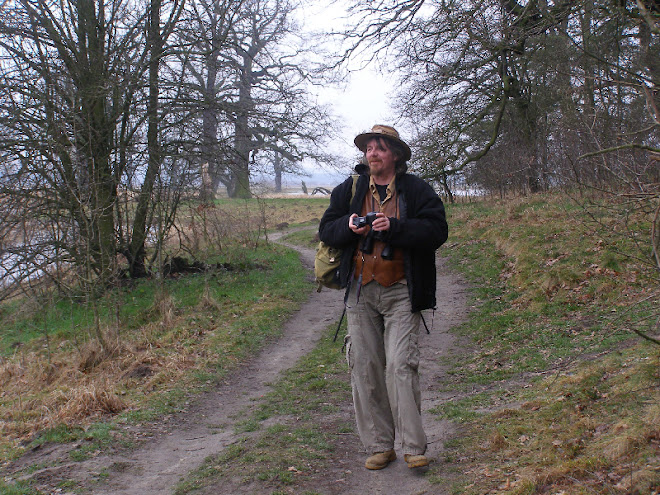
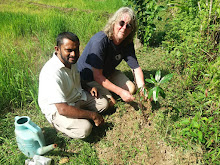
This is me

This is me
At the end of another Norfolk Coastal footpath walk. 47 miles, 3 days 99 species of bird. September 2009

Caley Wood view

Caley Wood view
sunshine through the canopy 29.05.08

A walk along the Warta Valley, Poznan, Poland. Feb 2007

A walk along the Warta Valley, Poznan, Poland. Feb 2007
Best birds on this walk: black and middle spotted woodpecker and short toed treecreeper

About Me

My photo
A primary school teacher for 30 years, I retired from teaching in July 2009 to set up my own science enhancement and communication company. The Primary Works offers science clubs, workshops and staged science shows nationwide. I have always been interested in bird watching since my early years. Apparently my first tick was after inquiring about a chaffinch and then receiving the Observer book of birds. By the age of 9 I had moved on to Tory Peterson's collins guide and was now involved on YOC birding holidays to Northumbria, Essex coast, Slimbridge and Yorkshire. My twitching rule is that I will willingly travel 1km for each gram the bird weighs. However, I have had many rarities just by being in the right place. I have travelled widely throughout Europe and also visited Australia and Sri Lanka. In 2016 I spent time at Portland Bird Obs and two trips to Aviero, Portugal. 2017 found me back in Sri Lanka in Feb/March, then July and back for New Year's Eve celebrations in December. Also returned to The Camargue in May for a 4 day trip. Few plans for 2018, but nothing yet booked apart from a trip to the IOW.

Grey heron

Grey heron
Over the allotment 28.09.08

Southern Hawker

Southern Hawker
Ridge footpath 27.08.08

Juvenile green woodpecker (17.08.08)

Juvenile green woodpecker (17.08.08)
Note the stripes, denoting a bird fledged this year.

common blue

common blue
Ash Valley G.C. 15.08.08

Indian balsam (impatiens glandulifera)

Indian balsam (impatiens glandulifera)
River Ash

azure damselfly

azure damselfly
River Ash 28.07.08

marbled white

marbled white
Discovered at Westland Green 22.07.08

ruddy darter

ruddy darter
Bush Wood 21.07.08

honeysuckle 19.07.08

honeysuckle 19.07.08
growing in hedgerow in Chapel Lane

cinnabar moth caterpillar

cinnabar moth caterpillar
Photographed on ragwort 19.07.08

Bittersweet

Bittersweet
Study of petals 11.06.08

male yellowhammer

male yellowhammer
08.06.08

common blue butterfly

common blue butterfly
06.06.08

River Ash

River Ash
looking south from the bridge at Hadham Ford

Common poppy (papaver rhoeas)

Common poppy (papaver rhoeas)
in rape field 29.05.08

Caley Wood sunshine

Caley Wood sunshine
29.05.08

Millenium Wood fox

Millenium Wood fox
24.05.08

common comfrey (symphytum officinale)

common comfrey (symphytum officinale)
06.05.08 banks of the River Ash

Garlic Mustard or Jack by the Hedge,(Alliara petiolata)

Garlic Mustard or Jack by the Hedge,(Alliara petiolata)
flowers, leaves and fruit edible . Good in salad and pesto

April showers

April showers
Double rainbow 30.04.08

Caley Wood bluebells

Caley Wood bluebells
22.04.08

Yellow Archangel

Yellow Archangel
Chapel Lane (20.04.08)

sunlight 16.04.08

sunlight 16.04.08
looking south west from Bush Wood

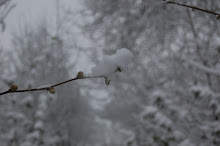
snowy buds

snowy buds
06.04.08 in Bush Wood

Looking north west

Looking north west
05.04.08 evening shower approaching

Back Garden

Back Garden
Easter Sunday (23.03.08)

Brick Kiln Hill

Brick Kiln Hill
Looking east (23.03.08)

No play today

No play today
The 2nd hole at Ash Valley golf course

Teasel head

Teasel head
Bush Wood (21.03.08)

Reflections

Reflections
daffodils at Bush Wood pond (21.03.08)

Swollen River Ash

Swollen River Ash
The river at the bottom of Winding Hill 16.03.08

Daybreak over the chapel

Daybreak over the chapel
Thursday 13th March

Wild daffodils (narcissus pseudonarcissus)

Wild daffodils (narcissus pseudonarcissus)
growing in Bush Wood

January snowdrops

January snowdrops
Banks of River Ash, north of Much Hadham

Good Moon

Good Moon
From garden 24.01.08

Village Green

Village Green
Looking east towards Acremore Street

Looking south before Hadham Ford

Looking south before Hadham Ford
rare January blue sky

Useful sites

The following are some useful websites that may interest readers of this blog.
Firstly, Bishop's Stortford Natural History Society http://bsnhs.webplus.net/

Fellow birder, Gary Whelan's blog. Gives reports from our trips out together plus reports from his trips abroad. http://hairybirders.blogspot.co.uk
http://www.hertsbirdclub.org.uk/ The official herts bird club website. Frequently updated, listing bird sightings around the county. Offers links to many other websites. Both of these sites also offer links to yahoo discussion groups.
http://www.birdforum.net/ An international site. You can enter as a guest but become a member( free) to post comments, bird sightings and just about anything to do with wild birds. Good news updates, classified section for binoculars, cameras etc.
http://www.guidedbirdwatching.com/ A new site set up where you can contact people worldwide who will help you find good birds in their country. UK section being set up presently.
http://www.britainsbirder.co.uk/
Fellow birders blog. Strtford resident, Graeme Smith regulary birds the area south of Stortford as well as around Spellbrook and the River Stort from Spellbrook to Twyford Locks. Some superb bird photography: Graeme uses a digital camera attached to his powerful telescope to get detailled images of the birds he sees. Well worth a browse.
Two local sites that may be of interest can be found at
http://www.thehadhams.com/ www.thepelhams.net/content/section/12/139/

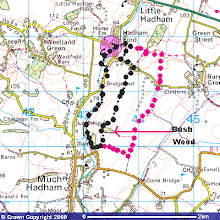
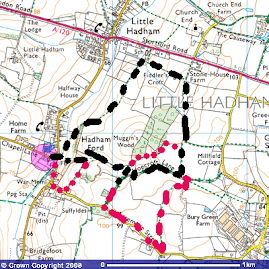
South Easterly walk

South Easterly walk
black, normal, red extended walk

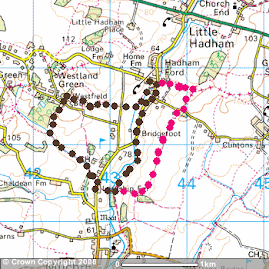
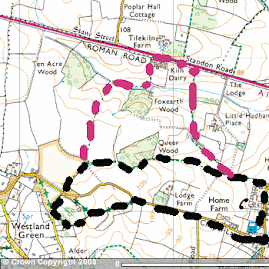
South Westerly route.

South Westerly route.
Black usual, red extended

North Easterly walk

North Easterly walk
black short, walk. Red, extended

North West Patch

North West Patch
black route regular. Red route the extended wander