Monday, 26 December 2016

Moth Review of the Year: Part 4 : August and September 2016

A nearly full period of uninterrupted mothing meant I was out with the heath 15W actinic on many occasions as well as running the Skinner 125W MV trap in the garden each night except 5th and 6th August.
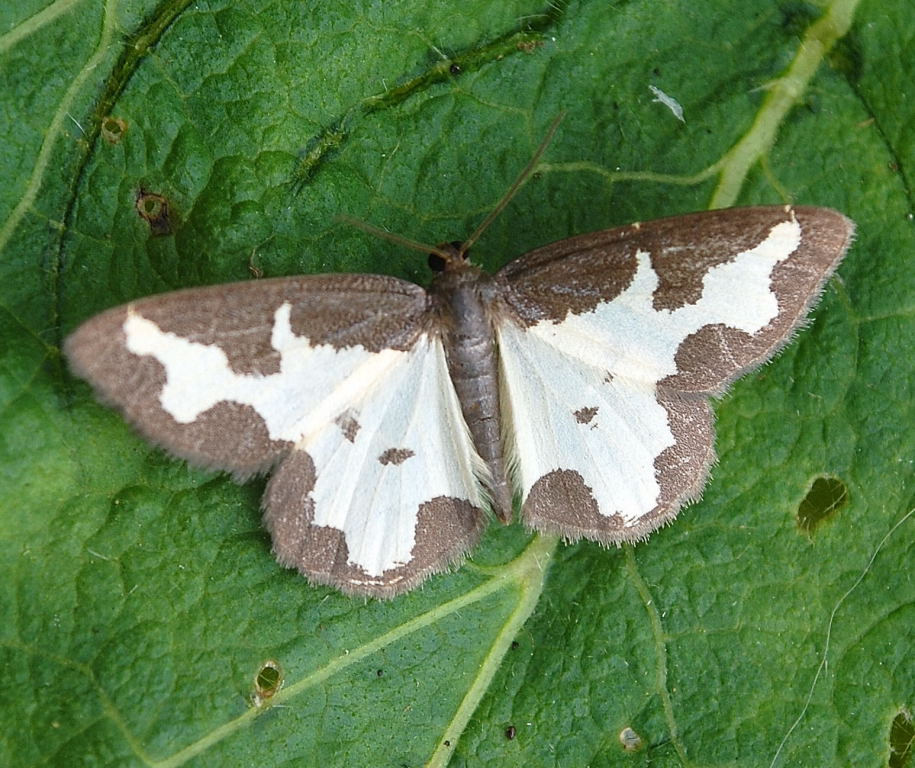
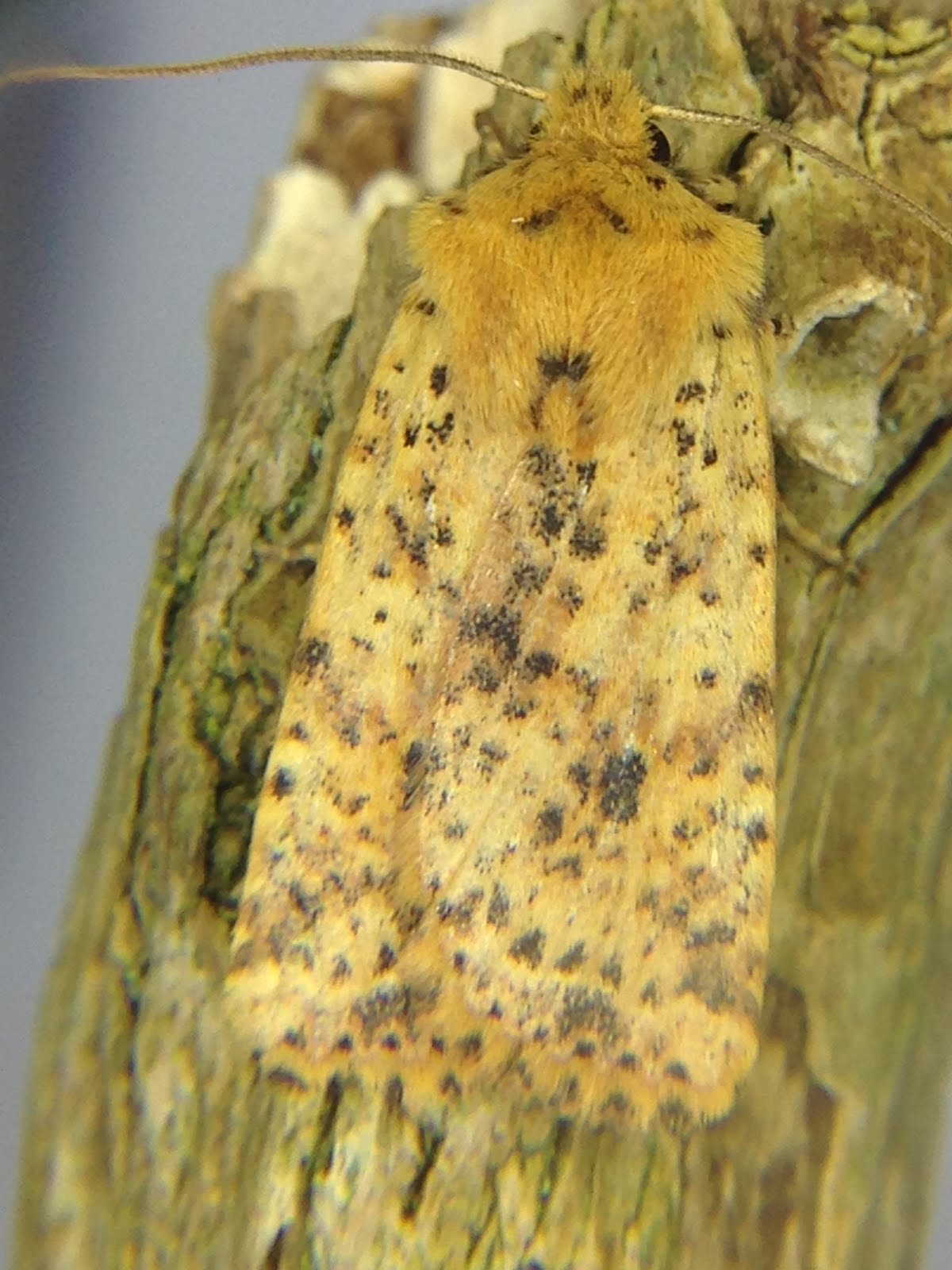
A visit to Millennium Wood on the 2nd gave records of Acleris emargana, Grapholita funebrana and Small phoenix. The latter being the only record for the year. On the same night I took a new for parish records of Acentria ephemerella and Tree Lichen Beauty ( the first of 4.) An Orange swift was the 200th macro of the year.
Plutella porrectella

Acleris emargana

Tree lichen beauty

The following night a trip to Valley Fields gave plenty of moths but nothing new whilst a Yponomeuta malinellus was a new for year record. A further micro, Mompha choragella was trapped on the 5th. However, whilst I was away giving a presentation for the RSPB in Lowestoft and then running an owl pellet show for the weekend at Ipswich Water Festival, Graeme Smith (GJS) ran several traps in Millennium Wood. Amongst good number he and Steve Easby managed to net a Tissue, a singularly rare moth for Herts.
The first Square spot rustic was taken on the 7th, Maple pug (8th), Lime speck pug, Plain pug and Borkhausenia fuscescens all on the 9th, followed by Dusky Thorn (10th,) Cloaked minor and a new for parish Cochylimorpha straminea on the 11th
By this time, the early autumn moths were to be expected, so 5 Svennson's copper underwing from Millennium Wood on the 11th were no surprise, neither were Plutella porrectella and Parornix angicella the following night in the garden
Coxcomb Prominent

Cypress pug

Dusky thorn

A trap in the graveyard at the bottom of the garden the following night resulted in Parapoynx stratiotata and Eudemis profundana as well as Toadflax pug and Juniper pug to the garden trap.
The next successful for new records night was the 15th, when Coxcomb prominent and Gelechia senticetella entered parish records with Currant pug and Nutmeg new for year. A first for the year Rosy Rustic on the 16th from Alder Wood, Copper Underwing (18th) from Hoecroft Lane and the same night another new parish moth, a Cochylis hybridella in the garden Skinner.
Brick Kiln Hill opposite the pub realised a solitary Vapourer on the 19th in amongst a selection of over 30 moths. A Galleria mellonella  was the 200th micro of the year before Udea fulvalis (22nd) Oak hooktip and Depressaria radiella (Hadham Hall 23rd.)
Also on the 23rd a good selection in the garden trap, with Enarmonia formosana, Marbled Beauty, and Udea ferrugalis. However, the night will be best remembered for the arrival of my 1st Vestal, a true immigrant and one that was recorded throughout Herts this year. In total, I had 9, all to the garden trap, with the last one on 13.ix.16.
Few late August moths such as Centre barred sallow meant I finished August with 208 micros and 228 macros. Late additions to records were Digitvalva pulicarie (garden 27th) Cypress pug and Mompha propinquella in the garden on 31st.
Centre barred sallow

Enarmoria formosana

Frosted orange
September kicked off with good numbers to the traps but nothing new for year or parish until 2 white points turned up unexpectedly on the 3rd, an Epinotia ramella (5th), Nymphula nitidulata (6th) and Brown spot pinion (8th)
Black rustic

Deep brown dart

Epinotia ramella

A yellow line Quaker on the 9th let us all know it was Autumn and this was more evident with the arrival of the stunning Black Rustic on the 12th. The 13th gave up new for year records of Agonopterix alstromeriana and Mompha subbistrigella from the garden whilst Phyllonorycter corylii, Ancylis mitterbacheriana and Catoptria pinella and Pink Barred sallow from Millennium Wood.
A community moth night in Millennium Wood on the 15th was well attended with over 20 locals and local press meant a good article in the Herts and Essex Observer. Of particular interest was Ypsolopha horridella, an uncommon moth for Herts, but one we have already taken in this wood. Also, Emmetia marginea, Caloptilia semifascia and Argyresthia albistria.
Autumn truly arrived on the 24th with Beaded chestnut and Grey Pine carpet in the garden, Red Line quaker and Deep Brown Dart (26th) and a Herald in Chapel Lane on bramble (28th.)
Ypsolopha horridella

Yellow line quaker

Red line quaker.

Vestal in smart plumage

Another superb Vestal

September totals now stood at 242 macros and 218 micros, a total of 460, so 40 more species to reach 500 for the year. Still on, I thought at the time.
In total, 9094 moths had been recorded since Jan1st, so 10,000 was also a reasonably feasible total. However, it looked like some leaf mining work was going to be required to get the species list going, so October and November were already looking busy. My fingers were crossed for some warm, calm nights to finish the year.

Selected first and last macro records:
Orange Swift: 02.viii.16 - 30.xiii.16
Maple pug: 08.viii.16 - 23.viii.16
Dusky Thorn: 10.viii.16 - 17.ix.16
Svennson's Copper Underwing: 11.viii.16 - 21.ix.16
Copper Underwing: 18.viii.16 - 21.x.16
Lunar Underwing: 15.ix.16 - 10.x.16

Numbers were supplied by: Orange swift (25) Dusky Thorn (36) Lesser Yellow Underwing (57,) Lunar Underwing (90) and Beaded chestnut (44)


Selected micro dates:
Acleris emargana: 02.viii.16 - 15.ix.16
Acleris variegana: 03.viii.16 - 09.x.16
Udea ferrugalis 22.viii.16 - 07.ix.16
Cochylis hybridella: 18.viii.16 - 01.ix.16

Numbers supplied by: Acleris variegana (61) Agriphila tristella (124), Acleris emargana (14) Udea ferrugalis (9)
Graeme and Steve's Tissue. A superb find in Millennium Wood. (photo GJS)


Saturday, 24 December 2016

Moth Review of the Year: Part 3: July 2016

Returning from our Devon trip meant the first trapping day in July was the 3rd. Garden 125W MV Skinner on and off to Suffyldes Wood with the Heath actinic 15W. As previously, it would be a very long list if all new for year moths were mentioned, so I shall concentrate on new for parish records and touch on new for years that are unusual within Little Hadham VC20 parish.
On the 3rd a Lathronympha strigana, Epinotia rubiginosana and Epinotia abbreviana were all new to the parish, as was an Anania perlucidalis in the garden. In total 19 micros were trapped of which 11 were new for the year. Wonder what I missed whilst away?
The 4th was a busy night in the garden whilst a pleasing Aglossa pinguinalis was a new one on the 5th.
A very worn Brown veined wainscot

Catalysta lemnata

Leopard moth

The garden record was again beaten on the 6th with 96 moths of 56 species, including Cnephasia asseclana and Coleophora flavipennella, both new for records. Also, the first July highflier of the year, one of 58 taken, concluding with the final specimen on 16th August. A headtorch visit to Westland Green gave up plenty, including Syncopacma larseniella on the 7th and Hedya salicella to actinic at Valley Fields.
The parish records continued to grow, with Eudonia pallida and Epinotia signatana (garden 7th), Anacampsis populella and Mompha orchaeceella (Ash Valley Golf Course, 10th) Coleophora paripennella and Oidaematophorus lithadactyla (Westland Green 14th) and Small Dotted Buff, Mullein Wave. along with Brachmia blandella and Epiblema foenella (19th Alder Wood). This was indeed a good night  with many new for year species meaning the totals stood at 160 micros and 176 macros by the 20th July, with an Agapeta hamana being the 3000th moth of the year on the 19th.
Maybe one of the year's highlights was the Dusky Plume (Oidaematophorus lithodactyla), not a common moth in Hertfordshire and thanks to GJS for confirming my identification.
Dusky plume (Oidaematophorus lithodactyla.) Possibly moth of the year. GJS photo, Many thanks

The next moth on to my records was a surprise, a leaopard moth to the garden skinner on the 23rd, with a pleasing, if very battered Brown veined wainscot and Helcystogramma rufescens (25th garden), a Catalysta lemnata (Hadham Hall 27th), a Stigmella trimaculella (Garden 28th) and the final new for records was a Tinea trinotella in the garden on the 29th. However, one that had me rushing for the field guides turned up in the garden Skinner on the 26th, a moth I was not at all familiar with. An Olive which, surprisingly, is more common in Herts than I had expected.
A Tawny speckled pug was the 4000th moth of the year and by the end of July the totals were 183 micros and 199 macros. The target of 500 moths looked on but 10,000 moths recorded still seemed to be a long way off considering we were well over half way through the year. A good August and September were needed to guarantee success for both targets.
Epiblema foenella

Hadham Hall trapping site

Olive


Selected first and last dates in July:
Swallow tailed moth: 03.vii.16 - 27.vii.16
Buff tip: 04.vii.16 - 07.vii.16
Small emerald: 05.vii.16 - 25.vii.16
Short cloaked moth: 06.vii.16 - 17.vii.16
Clay: 09.vii.16 - 04.viii.16
Dusky Sallow: 21.vii.16 - 31.vii.16

Numbers this month were supplied by: Large Yellow underwing (180 until 16.x.16), July Highflier (58 until 16.viii.16) Clay (24) Small fan foot wave (43 until 16.viii.16) Dingy footman (155 until 18.viii.16) This total included a quite amazing 43 to the actinic trap in Suffyldes Wood on 25th.

Micro number: Eucosma cana (85) Epinotia nisella (30) Carcina quercana (52), Endotricha flammealis (45) Yponomeuta evonymella (80) Agriphila geniculea (171) Pleuroptya ruralis (116) Crambus perlella (82) and Agriphila tristella (124)

Next installment later in the week, August and September.

Friday, 23 December 2016

Moth Review of the Year: Part 2: May - June 2016

May is a month when there appears to be a lull in moth numbers following the spring emergence, but certain days, with night time temperatures in excess of 8C meant good numbers were taken throughout the month.
On the 1st the Heath trap was set in Suffyldes Wood where I took a Waved umber as NFY whilst I wandered off with torch and net to Millennium Wood. Just one moth here, the only Oak nycteoline of the year whilst the garden gave up a new for parish record of Brindled beauty. Not a bad start to the month.
Brindled beauty, a new for parish record

Agapeta hamana

A Brimstone (5th) along with Agonopterix arenella and Parornix anglicella (New for parish) were pleasing. The following night the heath trap was placed on the slope opposite the village pub. A regular Friday night placement as easy to empty after a few jars with friends and only 400 yards from home. This particular night gave up Red-green carpet, shuttle shaped dart and the first of many common swifts. New for year records followed on an almost daily basis with the next week giving: Green carpet, Scorched carpet and Least Black arches (7th.) The latter being new for parish. Around this time I spent day time flushing and searching, getting an Esperia sulphurella (8th.)
Lunar marbled brown and Epiphyas postvittana(8th,) Aphomia sociella and Celypha lacunana (9th,) Yellow barred brindle (10th,) Rustic shoulder knot (11th) and on the 15th a Scorched carpet was my 500th moth of the year.
Aspilapteryx tringipennella

Clouded border

Dichrorampha simpliciana

Day time searches gave up Small yellow underwing in East Wood on the 16th and Glphipterix simplciella, Common carpet, Silver Y later the same day from Westland Green. I returned at night to take Silver ground carpet and Flame carpet that evening. 17th gave Elasticha argentella on a day time check whilst Freyer's pug, V pug, and oak tree pug all to light.
The new for years kept coming: White ermine (18th) Maidens blush (19th) along with a new for parish Sandy carpet from Alder Wood. Another new for parish records the same night was a Dwarf pug, so the heath trap was certainly paying its way whilst a Spruce carpet was NFY. The evening finished with the first Clouded border of the year in the garden.
By mid May I begin to anticipate the increase in micros and this certainly proved true this year: Cydia pomonella (21st), Evergestis forficalis (21st) Monopsis weaverella (22nd) along with another new record for Little Hadham, a Scrobipalpa costella. The 25th gave the first of many Anania hortulata.
Waved umber


Plutella xylostella

Flame carpet

Macros during this period were Lime hawkmoth, Flame shoulder, Marbled minor, Willow beauty, Treble lines, Red twin spot carpet, Common marbled carpet, Ingrailed clay, Pale mottled willow and Snout.
Day netting over the local golf course on 27th proved most fruitful with 3 new for parish records: Endothenia oblongana, Dichrorampha simpliciana and Coleophora striatipennella along with 11 Dicrorampha plumbana. A Mother Shipton was also recorded before the trap was back on the hill for Agapeta hamana 
The 28th gave new for parish records of Micropterix aruncella and Aspilapteryx tringipennella, again day netting on the golf course.
The month concluded with Spectacle, Poplar hawkmoth, Middle barred minor, Cinnabar, Bright line brown eye, May highflier and Mottled rustic in the macros and Ephestia unicolorella, Plutella xylostella, Crambus lathionellus, Ebdrosis sarcitrella and Scoparaia basistrigalis in the micros.
Spruce carpet

Common swift, 1 of 131 trapped this year

Phone shot of the only Oak nycteoline taken this year netted in Millennium Wood

May finished with totals of 77 macros and 36 micros. This does highlight the importance of daytime netting in grassy habitats as Dichrorampha sequana was taken at the same site as 2015. This was classified as Herts extinct before this colony, feeding on tansy was found.
The last day of May coincided with the invasion of Plutella xylostella, with 57 in the garden trap. In total, 727 moths had been taken.

Selected first and last dates:
Red-green carpet: 06.v.16 - 30.v.16
Least Black Arches: 07.v.16 - 30.v.16
Oak tree pug: 17.v.16 - 22.v.16

May numbers supplied by: Brimstone (164 and last taken 21.ix.16) Scorched carpet (28) Buff ermine (83 and last taken mid August) Common pug (39 and still on the wing until 23.vi.16)

By the time June comes around it becomes way to lengthy to list every new for year record, with ones taken every day during the first 10 days of the month. However, the first Setaceous Hebrew Character was taken on the 3rd, the first of 1060 of this species, the last being recorded on 17.x.16!
New for parish records in June: Callisto denticulella (2nd) Notocelia trimaculana (4th) Pebble hooktip (8th) Coptopriche marginea (9th) Achroia grisella (11th) Gillmeria pallidactyla (18th) Prays fraxinella (22nd)
Achroia grisella

Anania hortulata

Eulia ministrana

In June, a week's camping holiday in Devon meant 7 nights without records, with the trap back on by 03.vii.16.

Other more unusual records during this month were: Pale prominent (4th and only 4 taken) Rivulet (8th and just the one) Scorched wing (9th and 1 of 2) Brindled pug (9th and the only specimen) as was Light arches on the 16th.
A pleasing Green silver lines was only my second ever record on the 19th and followed by another on the 4th July whilst a Fern (22nd) was the only one, the same with Pinion streaked snout (24th)
A new for parish Sandy carpet

Prays fraxinella

Another new record: Pebble hooktip

On the 9th GJS and I ran several traps in Millennium Wood for another residents moth night. Again, a well attended event with families coming along from dusk. Shame that when the best moths are on the wing it is too late for the children to get out on a school day. However, I do pot several to show them at a later date, and take them into the local village primary school. As always, hawkmoths are really popular with children. In all on the 9th we took 46 species of over 250 moths with Yponomeuta cagnagella, Anthophilia fabricana, Nemophora degeerella, Udea olivalis, Tortrix viridana, Tinea semifulvella, Nematapogon swammerdamella and Parapoynx stratiotata being new for year micros and Brindled pug, Scorched wing, Clouded silver, Garden carpet and Yellowshell making the year macro list. In all 30 Silver ground carpets were recorded as well as a further 20 Plutella xylostella and both of these were conservative estimates!
On the 13th a Pale oak beauty to the garden trap was only 3rd parish record and Beautiful Golden Y on the 18th just one of two this year.
On the 21st a new for year record of 59 moths of 36 species taken to the garden Skinner. This record was soon the be beaten with 63 of 40 on the 23rd.
By the end of June the running totals were: 127 macros (Brindled pug being the 100th macro for the year) and 75 micros made up from 1558 moths.
Green silver lines

Wormwood pug

Pine hawkmoth

Selected first and last dates for June
Large nutmeg: 03.vi.16 - 15.vi.16
Straw dot, 1st gen: 07.vi.16 - 25.vi.16
Common wainscot: 13.vi.16 - 21.ix.16 (252 in total)
Brown rustic: 04.vi.16 - 09.vii.16.

Numbers from: Heart and Dart (67) Setaceous Hebrew Character (1060), Light emerald (77) Garden carpet (29) Treble brown spot (35) Straw dot (71 in 3 generations, finishing on 04.x.16)

Next installment, Just July to follow

Thursday, 22 December 2016

Moth Review of the Year: Part 1: January - April 2016

An overview of my mothing year. This year I set out to trap and identify 10,000 moths of 500 species. To aid this cause, I purchased a 15W Heath actinic trap in early March which meant I could leave this battery operated trap at 12 sites within the parish as well as run the Skinner 125W each night in the garden. I selected the sites along lines of: ease of access, full permission granted for private land from local farmer Steve, variety of vegetation and similarity of vegetation. All went well if slow on the recording front, with the first 4 months realising 26 macro species and a rather disappointing 9 micro species.

The first moths were taken on the 3rd Jan with me visiting a few sites with headtorch and net. These were all winter moth and no further moth was trapped until the 13th, a Satellite. Things continued slowly with Early moth, pale brindled beauty (23rd) and my 1st micro of the year, an Acleris ferrugana on the 24th. An Acleris sparsana was taken the following night before 2 Dotted border completed the first month in the garden. The 31st was quite remarkable: 41 moths of 14 species from Millennium Wood, with Chestnut, Brindled pug, Common quaker, March moth, Spring usher and Dark chestnut as well as micros Torticodes alternella and Agonopterix heracliana all going on the year list.
Acleris ferrugana

Rather worn Acleris sparsana

Common quaker

The weather in February didn't prove anymore conducive to trapping, with only 8 nights of the month bringing results that included just a Clouded drab (20th Feb) and Small quaker (21st)
Clouded drab

Dotted chestnut

Dotted border

As March progressed, as expected, moths were becoming more regular and the addition of the Heath trap on the 4th meant I was out and about on a frequent basis. Diurnea fagella was new on 5th March as was Acleris schalleriana, but the 1st uncommon moth was taken at Pig's Green on the 10th, a Dotted chestnut.  A garden Early grey the following night before a Twin spotted quaker (15th) and Shoulder stripe (21st) became the 18th macro of 2016. The 200th moth of the year was recorded in Hoecroft Lane on the 22nd before the first new for parish record. This was in the garden on the 26th, Povolyna leucapennella, confirmed by Graeme Smith (GJS) and only the 3rd record for the county. Angle shades and Engrailed followed on the 30th with March closing with a running total of 276 moths of 20 macros and 7 micros.
Povolyna leucapennella

Spring Usher


Looking back at April records it can be seen that, with the portable trap, I recorded moths on every night, apart from 18th - 21st when I was on a photo shoot of the Birds of Aviero, Portugal.
New moths turned up on a reasonably regular basis: Double striped pug (1st) Early thorn (3rd) and Red Chestnut (8th) this being the 2nd new for parish record, again taken to the garden Skinner. A Streamer on the 11th before 2 pleasing captures in Millennium Wood during our first parish moth night of the year on the 14th, Powdered quaker and Water carpet.The following night Mompha epilobiela was another new for parish from Suffyldes Wood. The month concluded with just a Hebrew character to the garden trap.
Powdered quaker

Water carpet

A few first and last dates:
Winter moth: last on 13.i.16
Satellite: last 04.iv.16
Early Moth: first 23.i.16 - last 04.ii.16
Chestnut: 31.i.16 - 05.iv.16
Small quaker 21.ii.16 - 28.iv.16

Numbers were supplied by Winter moth (27) Satellite (27) Common quaker (98) and Hebrew character (80) The latter two were still flying into May.

Next installment May - June to follow tomorrow. Then it gets busy!!

Friday, 9 December 2016

Moth Target achieved

At the beginning of the year I set myself a target of trying to catch and identify 10,000 moths of 500 species. The 500th species, a Phyllonorycter platani from London plane was taken on 13th November but I had to wait until last night to pot the 10,000th moth.
The moth was, not unexpectedly, a winter moth to the actinic 15W trap set on a footpath on Ash Valley Golf Course, 1 of 33 attracted to the light along with a solitary mottled umber. Previous to this I had spent time with a headtorch and net visiting several of the sites I regularly trap in the parish, taking:
6 winter moth at Hadham Hall
2 winter moth at Suffyldes Wood
5 Satellite, 2 dark chestnut and a mottled umber at Hoecroft Lane
7 winter moth to headtorch as I set the trap on the golf course.
Dark chestnut

December moth

Mottled umber, 255th macro species for 2016

Satellite

Mottled umber and 2 dark chestnuts
This left me on 9998 moths and, upon returning to the trap at 10pm pleased to find the collection to take me past the target.
Just to finish off a good night I had the 1st garden moths since 15th November, with a winter moth attracted to our porch light and a December moth in the trap this morning.
Over the year, with the addition of the Heath trap that I bought in March, I have trapped at 14 away sites in the parish as well as the garden. I have missed 14 nights in the garden and been hunting moths around the parish on 195 separate occasions.
Next year I plan to be more a species hunter, going for less common moths by setting the trap at the right time of the year next to specific larval plant foods. One of the first species targeted will be Sloe Carpet, which usually flies when the blossom is on blackthorn, but the trap will need to be set right inside a flowering clump of this plant to stand any chance of capture. This moth is yet to be found in Hertfordshire, so a bit of a long shot! Should also find reasonable numbers of water carpet at the same time. Another plant I shall target is gorse, which grows successfully on Ash Valley Golf Course and to run the trap here, I shall require permission. So far, all my trapping on the golf course has been on public footpaths that cross the course at several places. The other target is to pass 700 species for the parish

Monday, 5 December 2016

Wander back from town

After a Costa coffee I set off in sharp, frosty conditions with bright sky, looking forward to some bird photography. However, very little on show and what I did see was too distant for worthwhile shots. Great and blue tits abounded along with robins, dunnocks and a few long tailed tits. Several flyover jays and plenty of wood pigeons were about the sum total for the whole 4 mile wander.
Posing blue tit
However, the walk was saved along the path from Green Street to Millfiled Lane. Across the field I noted 1, then 2 foxes playing near the field edge, before they bounded off into the long grass. A couple of long distant fox photos are always pleasing.
Distant pair of foxes
As I approached a gap in the hedge, I noted a 3rd fox rooting around in the brambles close to a ditch.
Unaware of my presence

Heard the camera from 40 yards away
I used the bend in the footpath to slowly approach the gap in the hedge, hidden from the foxes view. Of course, she could hear me and was not present when I crept around the corner. However, foxes are by nature, inquisitive creatures and I knew she would be somewhere close watching me. I slowly found a space in the undergrowth and only had to wait a few minutes.
As expected, she came out to see what was going on.
 Rather disappointingly, there were a few bramble shoots across the face and obscuring the eyes, so I needed to move. She had her gaze firmly on me and wasn't going to move anymore into the open. Chatting quietly to her, I moved a yard or so to the left and managed some pleasing shots in good light.
Better shot

Quick change of camera settings to highlight the fur colour.
After about 30 seconds she was gone into the undergrowth and I carried on, spotting common gull, yellowhammer, jays, skylarks and a solitary meadow pipit. A quiet walk with a definite highlight. Whilst I appreciate that these mammals can be destructive to chicken farmers etc I fail 100% to comprehend the desire to rip them to pieces with hunting dogs. So much more pleasant to see then looking this healthy in a rural setting and not the mangy ones that can be spotted emptying fish and chip wrappers from bins in the town. Clearly, by the state of the coat and the brightness of the eyes, this is a very healthy young vixen and it was a privilege to watch her in her habitat, not mine.

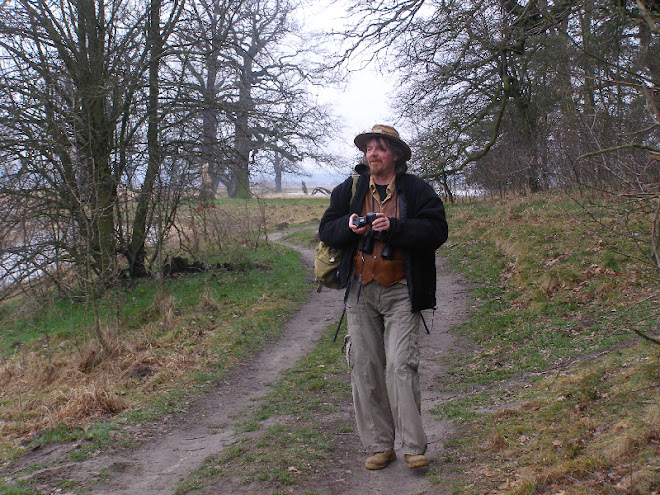
This is me

This is me
At the end of another Norfolk Coastal footpath walk. 47 miles, 3 days 99 species of bird. September 2009

Caley Wood view

Caley Wood view
sunshine through the canopy 29.05.08

A walk along the Warta Valley, Poznan, Poland. Feb 2007

A walk along the Warta Valley, Poznan, Poland. Feb 2007
Best birds on this walk: black and middle spotted woodpecker and short toed treecreeper

About Me

My photo
A primary school teacher for 30 years, I retired from teaching in July 2009 to set up my own science enhancement and communication company. The Primary Works offers science clubs, workshops and staged science shows nationwide. I have always been interested in bird watching since my early years. Apparently my first tick was after inquiring about a chaffinch and then receiving the Observer book of birds. By the age of 9 I had moved on to Tory Peterson's collins guide and was now involved on YOC birding holidays to Northumbria, Essex coast, Slimbridge and Yorkshire. My twitching rule is that I will willingly travel 1km for each gram the bird weighs. However, I have had many rarities just by being in the right place. I have travelled widely throughout Europe and also visited Australia and Sri Lanka. In 2016 I spent time at Portland Bird Obs and two trips to Aviero, Portugal. 2017 found me back in Sri Lanka in Feb/March, then July and back for New Year's Eve celebrations in December. Also returned to The Camargue in May for a 4 day trip. Few plans for 2018, but nothing yet booked apart from a trip to the IOW.

Grey heron

Grey heron
Over the allotment 28.09.08

Southern Hawker

Southern Hawker
Ridge footpath 27.08.08

Juvenile green woodpecker (17.08.08)

Juvenile green woodpecker (17.08.08)
Note the stripes, denoting a bird fledged this year.

common blue

common blue
Ash Valley G.C. 15.08.08

Indian balsam (impatiens glandulifera)

Indian balsam (impatiens glandulifera)
River Ash

azure damselfly

azure damselfly
River Ash 28.07.08

marbled white

marbled white
Discovered at Westland Green 22.07.08

ruddy darter

ruddy darter
Bush Wood 21.07.08

honeysuckle 19.07.08

honeysuckle 19.07.08
growing in hedgerow in Chapel Lane

cinnabar moth caterpillar

cinnabar moth caterpillar
Photographed on ragwort 19.07.08

Bittersweet

Bittersweet
Study of petals 11.06.08

male yellowhammer

male yellowhammer
08.06.08

common blue butterfly

common blue butterfly
06.06.08

River Ash

River Ash
looking south from the bridge at Hadham Ford

Common poppy (papaver rhoeas)

Common poppy (papaver rhoeas)
in rape field 29.05.08

Caley Wood sunshine

Caley Wood sunshine
29.05.08

Millenium Wood fox

Millenium Wood fox
24.05.08

common comfrey (symphytum officinale)

common comfrey (symphytum officinale)
06.05.08 banks of the River Ash

Garlic Mustard or Jack by the Hedge,(Alliara petiolata)

Garlic Mustard or Jack by the Hedge,(Alliara petiolata)
flowers, leaves and fruit edible . Good in salad and pesto

April showers

April showers
Double rainbow 30.04.08

Caley Wood bluebells

Caley Wood bluebells
22.04.08

Yellow Archangel

Yellow Archangel
Chapel Lane (20.04.08)

sunlight 16.04.08

sunlight 16.04.08
looking south west from Bush Wood

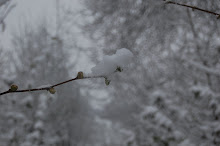
snowy buds

snowy buds
06.04.08 in Bush Wood

Looking north west

Looking north west
05.04.08 evening shower approaching

Back Garden

Back Garden
Easter Sunday (23.03.08)

Brick Kiln Hill

Brick Kiln Hill
Looking east (23.03.08)

No play today

No play today
The 2nd hole at Ash Valley golf course

Teasel head

Teasel head
Bush Wood (21.03.08)

Reflections

Reflections
daffodils at Bush Wood pond (21.03.08)

Swollen River Ash

Swollen River Ash
The river at the bottom of Winding Hill 16.03.08

Daybreak over the chapel

Daybreak over the chapel
Thursday 13th March

Wild daffodils (narcissus pseudonarcissus)

Wild daffodils (narcissus pseudonarcissus)
growing in Bush Wood

January snowdrops

January snowdrops
Banks of River Ash, north of Much Hadham

Good Moon

Good Moon
From garden 24.01.08

Village Green

Village Green
Looking east towards Acremore Street

Looking south before Hadham Ford

Looking south before Hadham Ford
rare January blue sky

Useful sites

The following are some useful websites that may interest readers of this blog.
Firstly, Bishop's Stortford Natural History Society http://bsnhs.webplus.net/

Fellow birder, Gary Whelan's blog. Gives reports from our trips out together plus reports from his trips abroad. http://hairybirders.blogspot.co.uk
http://www.hertsbirdclub.org.uk/ The official herts bird club website. Frequently updated, listing bird sightings around the county. Offers links to many other websites. Both of these sites also offer links to yahoo discussion groups.
http://www.birdforum.net/ An international site. You can enter as a guest but become a member( free) to post comments, bird sightings and just about anything to do with wild birds. Good news updates, classified section for binoculars, cameras etc.
http://www.guidedbirdwatching.com/ A new site set up where you can contact people worldwide who will help you find good birds in their country. UK section being set up presently.
http://www.britainsbirder.co.uk/
Fellow birders blog. Strtford resident, Graeme Smith regulary birds the area south of Stortford as well as around Spellbrook and the River Stort from Spellbrook to Twyford Locks. Some superb bird photography: Graeme uses a digital camera attached to his powerful telescope to get detailled images of the birds he sees. Well worth a browse.
Two local sites that may be of interest can be found at
http://www.thehadhams.com/ www.thepelhams.net/content/section/12/139/

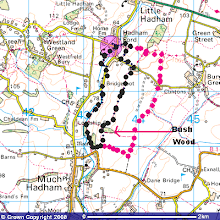
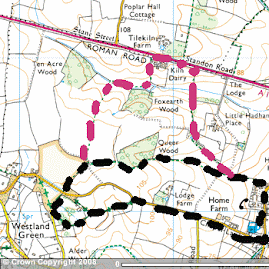
South Easterly walk

South Easterly walk
black, normal, red extended walk

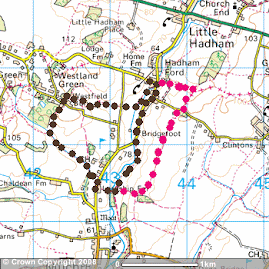
South Westerly route.

South Westerly route.
Black usual, red extended

North Easterly walk

North Easterly walk
black short, walk. Red, extended

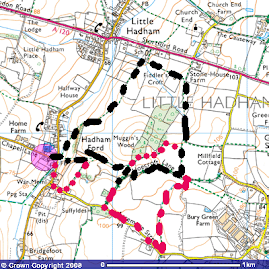
North West Patch

North West Patch
black route regular. Red route the extended wander