Wednesday, 10 June 2015

Micros

A 4.30am visit to the garden trap paid dividends in finding a few micros roosting on the perspex as well as the inside egg boxes. A later arrival would have meant missing the ones on the outside as they would have flown off by full sunrise.
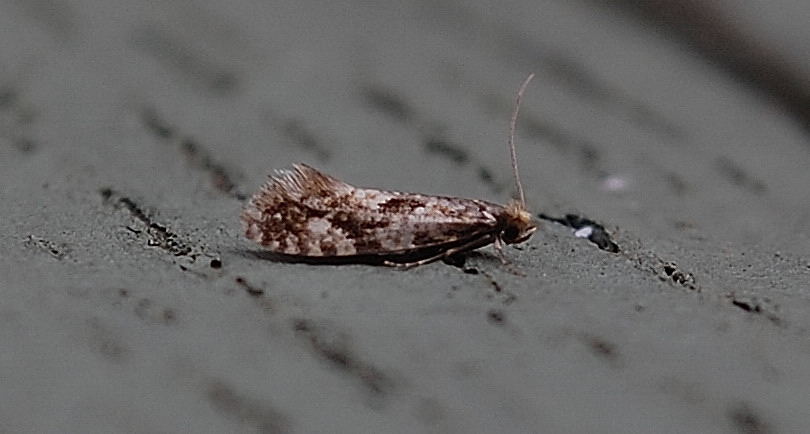
However, on closer inspection, these all turned out to be the same species: 3 Cydia striana, a common micro at this time of the year. Likewise, with the ones inside: Notocelia cynosbatella, heart and dart and a brown rustic.
Cydia striana, side view

Cydia striana, bird's eye view

Few more micros: 09.06.15

Argyresthia spinosella
Esperia sulphurella
An hour knocking insects out of trees in Millennium Wood yesterday afternoon was reasonably well rewarded. 5 silver ground carpet, Light emerald, Crambus lathoniellus, Celypha lacunana, codling moth (Cydia pomonella,) Esperia sulphurella and a new for parish record of Argyresthia spinosella.

Tuesday, 9 June 2015

Little moth news to report

Yesterday afternoon, a quick half hour sweep through Millennium Wood. Worthwhile in that I caught 2 Nemophora degeerella, a new moth for me, along with plenty of Anthophila fabricana, the nettle tap moth.
1 of 2 Nemophora degeerella

Placed on garden fern for photo
This micro moth has no known foodplant, but both these were taken on guilder rose, so worth returning to check for larvae in the next few weeks.
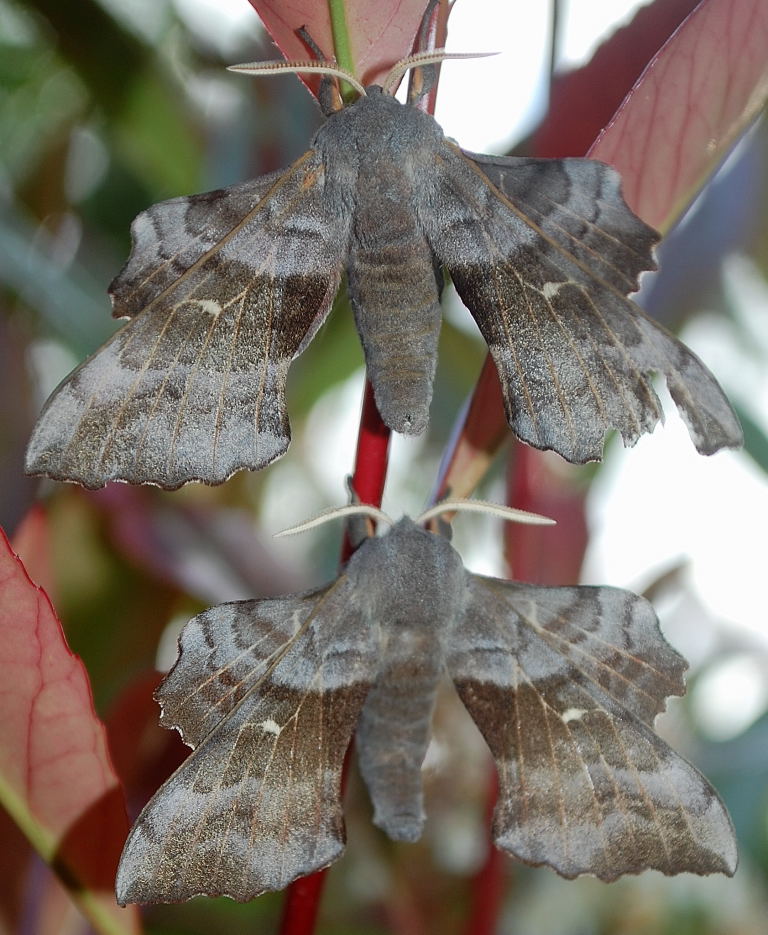
Skinner 125MV trapped just a handful last night. 2 poplar hawkmoths, treble lines, heart and dart and Eurrhypara hortulata, the small magpie moth. I managed to remove the hawks from the egg boxes by encouraging them on to a pencil and then placed them in a garden shrub. They were most cooperative for the photo.

Sunday, 7 June 2015

Sunny afternoon for mothing

Dicrorampha sequana, looking like a mating pair. Herts extinct from 1966 until yesterday!
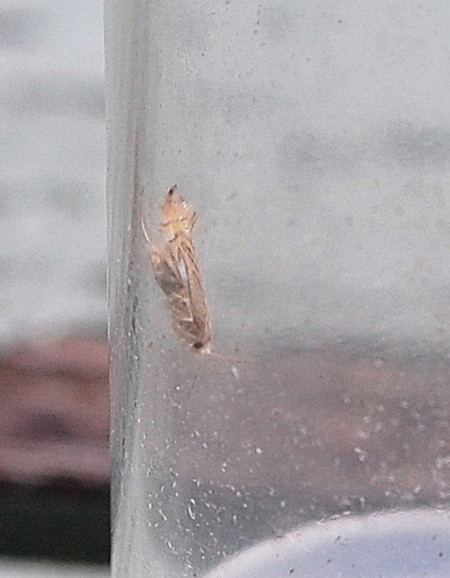
Glorious sunshine so headed off to Westland Green to kick out a few moths from the meadow. Very little about, with just one Celypha lacunana in the half hour. Consequently, I moved on to Ash Valley Golf Course footpaths. Much better results with, in less than an hour: 4 cinnabar, 3 straw dot, crambus lathoniellus, Anthophila fabricana and plenty of a micro moth yet to be identified. Also, awaiting identification, a tiny leaf miner moth beaten from a horse chestnut,and resembling Cameraria ohridella, the horse chestnut leaf miner. However, very lively in the pot, so fridged for identification later tonight.
Edit: 2 micro moth species taken have now been identified. Firstly Dicrorampha petiverella, a common and expected garssland micro. Secondly, much more stunning; Dicrorampha sequana, a moth declared extinct in Herts, having not been seen since 1966. A superb find.
Thanks to Graeme Smith for the all important dissection to prove this was indeed the correct identification.
Of note, plenty of swallows an overhead great spotted woodpecker, with young calling from a nearby nest and a hobby over the golf course. First for the parish this year.
Anthophila fabricana: nettle tap moth

straw dot

cinnabar moth

Dicrorampha sequana

Details from Book of Hertfordshire Moths

D. sequana left, D. petivirella right. Note shapes of "saddle"

Dicrorampha petivirella

D. sequana left, D. petivirella right.


Friday, 5 June 2015

Moth Trap 04.06.15

Looked like being a cracking moth night last night, but heavy rain after midnight dampened both the enthusiasm and the the moths moving.
However, a couple of new moths for the year were in the trap, namely, pale prominent, small magpie and common swift. All good to get on the year list, which after an appalling April and May, is now beginning to show signs of picking up. However, convinced I shall not get anywhere near last year's totals as just so far behind on both species and numbers.
pale prominent

common swift

Mothing in Hackney

On Wednesday 03.06.15, Graeme and I set off for East Bank West Bank Nature Reserve in Stamford Hill, Hackney. Upon arrival at about 8.45 we were given a quick tour round both sites, dissected by the Liverpool Street - Enfield railway line. Basically, a very narrow strip of land, about 3 yards wide and 0.33km long on both sides of the railway. Undergrowth was dense and very tricky carting 6 traps and 2 generators into the site. It became immediately apparent that head torches and netting would be virtually impossible within the reserve, so, once set up, we spent time attracting moths out on to the street where they were netted. This seemed a successful ploy and we quickly had several micros potted.
Due to the proximity of the houses we had lots of interested fol coming over to see what was going on and to see the potted moths. As usual, the macros: light emerald, willow beauty, garden carpet, marbledcarpet were of more interest until we passed over a micro and a hand lens.
Two police cars arrived to inquire as to what we were up too and, whilst not being over friendly, went away satisfied with our genuine reasons.
By midnight the prospect of hauling all the kit out meant we stopped the jennies and checked the contents. Not too much on offer and less in the battery driven actinics but a haul of, in total,  36 moths of 21 species.
Of particular note were for me Ash pug, Nemapogon cloacella and Swammerdamia pyrella which were all new for me with the latter also being new for Graeme.
Monopsis obviella

Kit unloaded. Reserve behind the railings and only 3 yards wide

Nemopogon cloacella (Cork moth)

Phyllonorycter platani, female that required dissection.

  1. 3 Small dusty wave
  2. 3 willow beauty
  3. 3 light emerald
  4. 1 garden carpet
  5. 1 Common marbled carpet
  6. 1 brimstone
  7. 1 Large yellow underwing
  8. 1 snout
  9. 3 common pug
  10. 1 Ash pug
  11. 3 Memaopogon cloacella (cork moth)
  12. 2 Monopsis weaverella
  13. 2 Endrosis sacritella (white shouldered house moth)
  14. 2 Epiphyas postvittana (Light brown apple moth)
  15. 1 Clepsis consimilana
  16. 1 Phyllonorycter platani
  17. 3 Bee moth (Aphomia sociella)
  18. 1 Swammerdamia pyrella
  19. 1 Monopsis obviella
  20. 1 Large yellow underwing
  21. 1 common swift

Wednesday, 3 June 2015

Finally: some moth news

A warmer and cloudier night last night looked promising for some moth activity. At 5.30 I visited the garden trap and was "happy" to discover 13 moths of  10 species. Hardly a record, but my first double figure garden haul since 22nd May! Last year on this day I took 26 moths of 23 species, showing just how poor 2015 has been so far.
A tawny marbled carpet was the only new for year moth, with regulars such as common pug, white ermine, brimstone and spectacle also found.
Micros were represented by Nematopogon swammerdamella (2nd garden record) and Tinea semifulvella, also 2nd garden record.
green carpet

white ermine

spectacle

brimstone
common pug

Tinea semifulvella
This takes my total moths trapped in 2015 to 319, compared to 2.06.14 when it was 593.
Comparisons: 2014 02.06.14 = 84 macros
                       2015 02.06.15 = 47 macros

                       2014: 02.06.14 = 22 micros
                       2015: 02.06.15= 25 micros but 5 have been taken on visits to other areas of the parish!

Sunday, 31 May 2015

Portland Bird Observatory weekend 29 - 31.05.15

Early Friday morning and I was setting off for a weekend at Portland Bird Observatory, Dorset.
Bird Observatory on the right, the lower lighthouse

Portland Bill
Basically, taking the M25 into account, a 3.5 hour journey, plus breakfast stop, so I was at Ferrybridge at the eastern end of The Fleet by 9a.m. Very windy and a few regular waders were about before I headed off to the Bird Obs. Once I had dumped my gear in the room, a brief sea watch from the patio before heading off to The Bill. Here, as expected, year listers in the shape of numerous guillemot, many razorbill, regular shag fly bys, and out to sea, a single great northern diver and a regular flow of manx shearwater.
Pair of linnets bathing in the observatory garden pond

1 of 100's of guillemots at The Bill

2 more

shag heading back to the cliffs

feeding razorbill

diving razorbill, note use of wings.

crashing waves at The Obelisk

rock pipit
Common buzzard over the Crown Estate fields

A good start. From here, I checked local wood at Culverwell, but nothing noteworthy so off to The Hump and Suckthumb Quarry. Here, I scored with another year lister, spotted flycatcher. From here, I thought I would give the reported purple heron half an hour to show. It didn't and was seen leaving Lodmoor at 9pm that evening.
male kestrel at Ferrybridge

little egret and shelduck: Ferrybridge

common terns; Lodmoor

No further reports as far as I am aware. Another check en route of Ferrybridge before heading back to the obs, where I got a drive by view of a whinchat near Culverwell. Year lister again. The rest of the day was spent at The Bill and around the fields near the Obs as my feet are still recovering from Dengue Fever caught last month in Sri Lanka. Very swollen big toe made walking uncomfortable. I finished off with a sea watch from the patio, where more Manx and gannets were noted.
The following morning broke bright, warm and much calmer and a sea watch from The Bill at 5.45 added fulmar to the year list as well as more of what was seen yesterday. I then checked Culverwell again, coming across 2 spotted flycatchers and a magpie robbing a blackbird nest. From here, over to Top Fields and the west cliffs. Stonechats, meadow pipits and ravens showed well, as did more fulmars and several kittiwakes. 2 of the male stonechats were ringed but I couldn't get a clear enough photo to read these.
meadow pipit: Top Fields

Ringed male stonechat: West Cliffs

A bag of chips at The Bill and then back to the obs for a check to see if anything was new; there wasn't, so off to The Hump again and another Ferrybridge check. Here, a summer plumaged sanderling out paced some rapid ringed plovers whilst 2 turnstones decided it was quicker to fly the 50 metres covered by the sprinters. It wasn't! Little egret, gulls got on to the trip list but little else of note. I always think the area around Suckthumb Quarry, with its overgrown buddleia and red valerian looks great for warblers and flycatchers and I wasn't disappointed. 2 more spotted flycatchers and then a surprise. I looked to the side of a buddleia bush and there was another spotted flycatcher. On 2nd look I noted white wing patch and the 3 white lines emanating from a the patch; a female pied flycatcher, another year lister and a pleasing bird to find so late into May.
Spotted Fly: The Hump

checking for insects to its right

Tweets were sent off and then back to the obs. I slowed down as a bird was perched in exactly the same spot as yesterday's whinchat and, I thought, a photo opportunity. However, as I approached, it was clearly a whitethroat, so back to the patio for a sea watch before a doze as I planned to be out with the net for moths. I had tried this on the previous night and scored a disasterous blank apart from a good view of the resident little owl. However, once again, the night turned cold, breezy and bright, so after some food, a quick trip to the Pulpit pub over the road.
hunble house sparrow in superb plumage near the Pulpit pub
Solitary guillemot and shag: West Cliffs

many more guillemots

This morning, Sunday, I awake to fog and heavy rain, so a lie in. Eventually, I was up for coffee at 6.15 and very little on the sea apart from gannets and a couple of common scoter. 2 flocks of swift and a swallow came in off , but by 9.30 it looked like nothing was going to be new, so I headed home, with a brief check at Ferrybridge and Avon Country Park where I heard a few regular warblers, but nothing else. M3 was chockablock, so a 4 hour journey home!
Cracking weekend, always great to stay at Portland and with a holiday camping in Weymouth coming up at the end of June, I am sure I shall pop in on a few occasions. Thanks to warden Martin and assistant warden Glen for making it such an enjoyable weekend. Cheers.


Species list:
great northern diver, fulmar, manx shearwater,gannet, shag, little egret,grey heron, mute swan, canada goose, shelduck, (10 sp) mallard, gadwall, shoveler, tufted duck, common scoter, red kite (M25) marsh harrier, common buzzard, sparrowhawk, kestrel, (20 sp) red legged partridge, pheasant, moorhen, coot, oystercatcher, ringed plover, sanderling, turnstone, black headed gull, herring gull, (30 sp) great black backed gull, kittiwake, sandwich tern, common tern, guillemot, razorbill, wood pigeon, collared dove, little owl, swift, (40 sp) skylark, rock pipit, meadow pipit, pied wagtail, wren, dunnock, robin, wheatear, house martin, swallow,(50 sp)  whinchat,  stonechat,song thrush, blackbird, garden warbler, blackcap, whitethroat, sedge warbler, reed warbler, cetti's warbler, (60 sp) chiffchaff  spotted flycatcher, pied flycatcher, great tit, blue tit, magpie, jay (A31) jackdaw, carrion crow, raven, (70 sp) starling house sparrow, chaffinch, linnet, goldfinch, greenfinch, bullfinch,

77 species with 9 year listers. Considering very few migrants were arriving, a pleasing result.

Thursday, 28 May 2015

Moth news. 28.05.15

Just finishing a few days of mothing before a couple of days staying at Portland Bird Obs. Yesterday, quiet time at the trap but knocked a few moths from Westland Green Common
Crambus lathoniellus

common wave

Elachista argentella
These were just some, with small yellow underwing and more Glyphipterix simpliana netted and identified. At the garden trap last night, 2 new moths for the year in the shape of a small square spot and heart and dart. 2 moths that undoubtedly will feature regularly over the ensuing weeks.
heart and dart

small square spot
This afternoon I took myself off to the local golf course (Open champion 2011!!) and netted any moths from the rough. I am most familiar with this golf course habitat, as either my drive or second shot will successfully find it! Today, flushed 2 cinnabar, 2 small yellow underwings, Mother Shipton, latticed heath, Crambus lathoniellus and a micro that, if my identification skills are close, will be a rare for Herts! Presently being dried for dissection, but hoping for a Dichorampha sp! All under recorded in Herts.
latticed heath

cinnabar moth

Mother Shipton

Dichrorampha plumbagana, only 10 records of this moth from 1901 - 2006 in Herts.


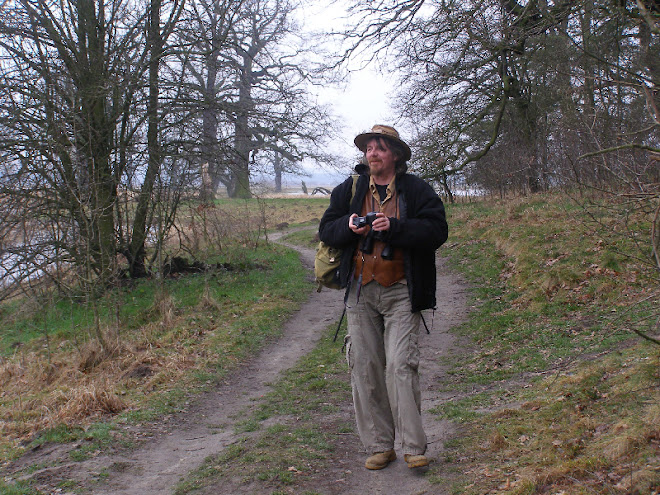
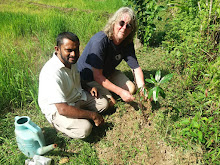
This is me

This is me
At the end of another Norfolk Coastal footpath walk. 47 miles, 3 days 99 species of bird. September 2009

Caley Wood view

Caley Wood view
sunshine through the canopy 29.05.08

A walk along the Warta Valley, Poznan, Poland. Feb 2007

A walk along the Warta Valley, Poznan, Poland. Feb 2007
Best birds on this walk: black and middle spotted woodpecker and short toed treecreeper

About Me

My photo
A primary school teacher for 30 years, I retired from teaching in July 2009 to set up my own science enhancement and communication company. The Primary Works offers science clubs, workshops and staged science shows nationwide. I have always been interested in bird watching since my early years. Apparently my first tick was after inquiring about a chaffinch and then receiving the Observer book of birds. By the age of 9 I had moved on to Tory Peterson's collins guide and was now involved on YOC birding holidays to Northumbria, Essex coast, Slimbridge and Yorkshire. My twitching rule is that I will willingly travel 1km for each gram the bird weighs. However, I have had many rarities just by being in the right place. I have travelled widely throughout Europe and also visited Australia and Sri Lanka. In 2016 I spent time at Portland Bird Obs and two trips to Aviero, Portugal. 2017 found me back in Sri Lanka in Feb/March, then July and back for New Year's Eve celebrations in December. Also returned to The Camargue in May for a 4 day trip. Few plans for 2018, but nothing yet booked apart from a trip to the IOW.

Grey heron

Grey heron
Over the allotment 28.09.08

Southern Hawker

Southern Hawker
Ridge footpath 27.08.08

Juvenile green woodpecker (17.08.08)

Juvenile green woodpecker (17.08.08)
Note the stripes, denoting a bird fledged this year.

common blue

common blue
Ash Valley G.C. 15.08.08

Indian balsam (impatiens glandulifera)

Indian balsam (impatiens glandulifera)
River Ash

azure damselfly

azure damselfly
River Ash 28.07.08

marbled white

marbled white
Discovered at Westland Green 22.07.08

ruddy darter

ruddy darter
Bush Wood 21.07.08

honeysuckle 19.07.08

honeysuckle 19.07.08
growing in hedgerow in Chapel Lane

cinnabar moth caterpillar

cinnabar moth caterpillar
Photographed on ragwort 19.07.08

Bittersweet

Bittersweet
Study of petals 11.06.08

male yellowhammer

male yellowhammer
08.06.08

common blue butterfly

common blue butterfly
06.06.08

River Ash

River Ash
looking south from the bridge at Hadham Ford

Common poppy (papaver rhoeas)

Common poppy (papaver rhoeas)
in rape field 29.05.08

Caley Wood sunshine

Caley Wood sunshine
29.05.08

Millenium Wood fox

Millenium Wood fox
24.05.08

common comfrey (symphytum officinale)

common comfrey (symphytum officinale)
06.05.08 banks of the River Ash

Garlic Mustard or Jack by the Hedge,(Alliara petiolata)

Garlic Mustard or Jack by the Hedge,(Alliara petiolata)
flowers, leaves and fruit edible . Good in salad and pesto

April showers

April showers
Double rainbow 30.04.08

Caley Wood bluebells

Caley Wood bluebells
22.04.08

Yellow Archangel

Yellow Archangel
Chapel Lane (20.04.08)

sunlight 16.04.08

sunlight 16.04.08
looking south west from Bush Wood

snowy buds

snowy buds
06.04.08 in Bush Wood

Looking north west

Looking north west
05.04.08 evening shower approaching

Back Garden

Back Garden
Easter Sunday (23.03.08)

Brick Kiln Hill

Brick Kiln Hill
Looking east (23.03.08)

No play today

No play today
The 2nd hole at Ash Valley golf course

Teasel head

Teasel head
Bush Wood (21.03.08)

Reflections

Reflections
daffodils at Bush Wood pond (21.03.08)

Swollen River Ash

Swollen River Ash
The river at the bottom of Winding Hill 16.03.08

Daybreak over the chapel

Daybreak over the chapel
Thursday 13th March

Wild daffodils (narcissus pseudonarcissus)

Wild daffodils (narcissus pseudonarcissus)
growing in Bush Wood

January snowdrops

January snowdrops
Banks of River Ash, north of Much Hadham

Good Moon

Good Moon
From garden 24.01.08

Village Green

Village Green
Looking east towards Acremore Street

Looking south before Hadham Ford

Looking south before Hadham Ford
rare January blue sky

Useful sites

The following are some useful websites that may interest readers of this blog.
Firstly, Bishop's Stortford Natural History Society http://bsnhs.webplus.net/

Fellow birder, Gary Whelan's blog. Gives reports from our trips out together plus reports from his trips abroad. http://hairybirders.blogspot.co.uk
http://www.hertsbirdclub.org.uk/ The official herts bird club website. Frequently updated, listing bird sightings around the county. Offers links to many other websites. Both of these sites also offer links to yahoo discussion groups.
http://www.birdforum.net/ An international site. You can enter as a guest but become a member( free) to post comments, bird sightings and just about anything to do with wild birds. Good news updates, classified section for binoculars, cameras etc.
http://www.guidedbirdwatching.com/ A new site set up where you can contact people worldwide who will help you find good birds in their country. UK section being set up presently.
http://www.britainsbirder.co.uk/
Fellow birders blog. Strtford resident, Graeme Smith regulary birds the area south of Stortford as well as around Spellbrook and the River Stort from Spellbrook to Twyford Locks. Some superb bird photography: Graeme uses a digital camera attached to his powerful telescope to get detailled images of the birds he sees. Well worth a browse.
Two local sites that may be of interest can be found at
http://www.thehadhams.com/ www.thepelhams.net/content/section/12/139/

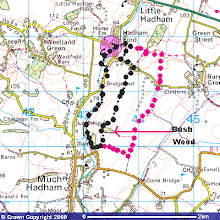
South Easterly walk

South Easterly walk
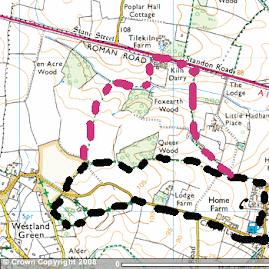
black, normal, red extended walk

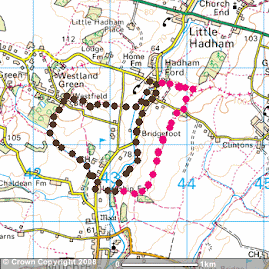
South Westerly route.

South Westerly route.
Black usual, red extended

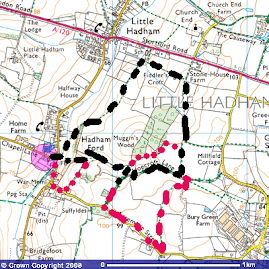
North Easterly walk

North Easterly walk
black short, walk. Red, extended

North West Patch

North West Patch
black route regular. Red route the extended wander